

2 chapters freeNo account needed.
Opens “Concerning Hereditary Principalities” in the player · no sign-up needed
I will leave out all discussion on republics, inasmuch as in another place I have written of them at length, and will address myself only to principalities.
Many commentators have viewed that one of the main themes of The Prince is that immoral acts are sometimes necessary to achieve political glory.
Inside the book
- Free nowno account · 2 chapters
- —Introduction24 min
- 2Concerning Hereditary Principalities1 min
- Premium23 chapters · every book, 7 days free
- 3Concerning Mixed Principalities15 min
- 4Chapter 45 min
- 5Chapter 52 min
- 6Chapter 66 min
- 7Chapter 714 min
- 8Concerning Those Who Have Obtained A Principality by Wickedness8 min
- 9Concerning A Civil Principality7 min
- 10Chapter 103 min
- 11Concerning Ecclesiastical Principalities5 min
- 12How Many Kinds of Soldiery There Are, and Concerning Mercenaries11 min
- 13Concerning Auxiliaries, Mixed Soldiery, and One’s Own8 min
- 14That Which Concerns A Prince on the Subject of the Art of War4 min
- 15Chapter 153 min
- 16Concerning Liberality and Meanness4 min
- 17Chapter 1712 min
- 19That One Should Avoid Being Despised and Hated18 min
- 19Chapter 208 min
- 21How A Prince Should Conduct Himself So as to Gain Renown8 min
- 22Concerning the Secretaries of Princes2 min
- 23How Flatterers Should Be Avoided4 min
- 24Why the Princes of Italy Have Lost Their States2 min
- 25What Fortune Can Effect in Human Affairs and How to Withstand Her6 min
- 26An Exhortation To Liberate Italy From The BarbariansIn 2 parts · Part 1 · 36:56 + Part 2 · 37:091 h 14 m
The opening
Concerning Hereditary Principalities
I will leave out all discussion on republics, inasmuch as in another place I have written of them at length, and will address myself only to principalities. In doing so I will keep to the order indicated above, and discuss how such principalities are to be ruled and preserved.
I say at once there are fewer difficulties in holding hereditary states, and those long accustomed to the family of their prince, than new ones; for it is sufficient only not to transgress the customs of his ancestors, and to deal prudently with circumstances as they arise, for a prince of average powers to maintain himself in his state, unless he be deprived of it by some extraordinary and excessive force; and if he should be so deprived of it, whenever anything sinister happens to the usurper, he will regain it.
We have in Italy, for example, the Duke of Ferrara, who could not have withstood the attacks of the Venetians in '84, nor those of Pope Julius in '10, unless he had been long established in his dominions. For the hereditary prince has less cause and less necessity to offend; hence it happens that he will be more loved; and unless extraordinary vices cause him to be hated, it is reasonable to expect that his subjects will be naturally well disposed towards him; and in the antiquity and duration of his rule the memories and motives that make for change are lost, for one change always leaves the toothing for another.
About the author
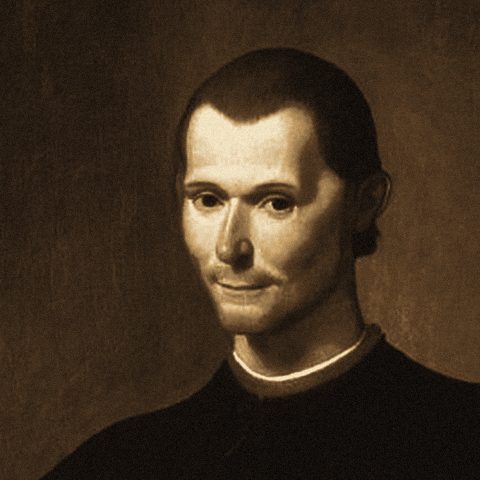
Niccolò Machiavelli
1469 Florence – 1527 Sant'Andrea in Percussina · Florentine statesman, diplomat, and political theorist
Niccolò di Bernardo dei Machiavelli was a Florentine diplomat, author, philosopher, and historian who lived during the Italian Renaissance. He is best known for his political treatise The Prince, written around 1513 but not published until 1532, five years after his death.
- 1469Born, Florence
- 1527Died, Sant'Andrea in Percussina
- 1531Discourses on the First Decade of Titus Livius
- 1532The Prince
If you like The Prince
More like this


Start with “Concerning Hereditary Principalities”
2 chapters free right now — no account. Your place follows you to iPhone and Android.