

2 chapters freeNo account needed.
Opens chapter 2 in the player · no sign-up needed
Of the Beginnings of Cities in general, and in particular of that of Rome.
Machiavelli analyzes the first ten books of Livy's History of Rome to extract practical insights applicable to contemporary politics and governance.
Inside the book
- Free nowno account · 2 chapters
- —Preface23 min
- 2Chapter 28 min
- Premium139 chapters · every book, 7 days free
- 3Chapter 311 min
- 4Chapter 42 min
- 5Chapter 54 min
- 6Chapter 65 min
- 7Chapter 710 min
- 8Chapter 86 min
- 9Chapter 96 min
- 10Chapter 105 min
- 11Chapter 117 min
- 12Book 1, Chapter 11: Of the Religion of the Romans6 min
- 13Chapter 136 min
- 14Chapter 144 min
- 15Chapter 154 min
- 16Chapter 163 min
- 17Chapter 177 min
- 18Chapter 185 min
- 19Chapter 197 min
- 20Chapter 204 min
- 21Chapter 211 min
- 22Chapter 223 min
- 23Chapter 232 min
- 24Chapter 244 min
- 25Chapter 253 min
- 26Chapter 262 min
- 27Chapter 272 min
- 28Chapter 282 min
- 29Chapter 292 min
- 30Chapter 307 min
- 31Chapter 313 min
- 32Chapter 323 min
- 33Chapter 332 min
- 34Chapter 345 min
- 35Chapter 359 min
- 36Chapter 362 min
- 37Chapter 377 min
- 38Chapter 386 min
- 39Chapter 393 min
- 40Chapter 4011 min
- 41Chapter 411 min
- 42Book 1, Chapter 42: How easily Men become corrupted1 min
- 43Chapter 432 min
- 44Chapter 442 min
- 45Chapter 454 min
- 46Chapter 463 min
- 47Chapter 477 min
- 48Chapter 481 min
- 49Chapter 495 min
- 50Chapter 502 min
- 51Chapter 511 min
- 52Chapter 524 min
- 53Chapter 537 min
- 54Chapter 542 min
- 55Chapter 559 min
- 56Chapter 562 min
- 57Chapter 573 min
- 58Chapter 5810 min
- 59Chapter 594 min
- 60Chapter 609 min
- 61Chapter 617 min
- 62Chapter 6212 min
- 63Chapter 633 min
- 64Chapter 6410 min
- 65Chapter 654 min
- 66Chapter 664 min
- 67Chapter 671 min
- 68Chapter 687 min
- 69Chapter 693 min
- 70Chapter 707 min
- 71Chapter 712 min
- 72Chapter 728 min
- 73Chapter 734 min
- 74Chapter 743 min
- 75Chapter 755 min
- 76Chapter 768 min
- 77Chapter 7713 min
- 78Chapter 789 min
- 79Chapter 799 min
- 80Chapter 804 min
- 81Chapter 814 min
- 82Chapter 825 min
- 83Chapter 838 min
- 84Chapter 8415 min
- 85Chapter 853 min
- 86Chapter 864 min
- 87Chapter 876 min
- 88Chapter 883 min
- 89Chapter 895 min
- 90Chapter 907 min
- 91Book 2, Chapter 31: Of the Danger of trusting banished Men3 min
- 92Chapter 927 min
- 93Chapter 933 min
- 94Chapter 9410 min
- 95Chapter 953 min
- 96Chapter 963 min
- 97Chapter 972 min
- 98Chapter 983 min
- 99Book 3, Chapter 6: Of Conspiracies46 min
- 100Chapter 1002 min
- 101Chapter 1016 min
- 102Chapter 1024 min
- 103Chapter 1038 min
- 104Chapter 1044 min
- 105Chapter 1057 min
- 106Chapter 1064 min
- 107Chapter 1075 min
- 108Chapter 1083 min
- 109Chapter 1095 min
- 110Chapter 1102 min
- 111Chapter 1115 min
- 112Chapter 1123 min
- 113Chapter 1132 min
- 114Chapter 11415 min
- 115Book 3, Chapter 23: Why Camillus was banished from Rome2 min
- 116Chapter 1163 min
- 117Chapter 1174 min
- 118Chapter 1182 min
- 119Chapter 1195 min
- 120Chapter 1203 min
- 121Chapter 1213 min
- 122Chapter 1227 min
- 123Chapter 1237 min
- 124Chapter 1242 min
- 125Chapter 1254 min
- 126Chapter 1267 min
- 127Chapter 1275 min
- 128Chapter 1284 min
- 129Chapter 1296 min
- 130Chapter 1303 min
- 131Chapter 1314 min
- 132Book 3, Chapter 40: That Fraud is fair in War2 min
- 133Chapter 1332 min
- 134Chapter 1342 min
- 135Chapter 1353 min
- 136Chapter 1363 min
- 137Chapter 1371 min
- 138Chapter 1382 min
- 139Chapter 1391 min
- 140Chapter 1402 min
- 141Chapter 1413 min
The opening
Chapter 2
Of the Beginnings of Cities in general, and in particular of that of Rome.
No one who reads how the city of Rome had its beginning, who were its founders, and what its ordinances and laws, will marvel that so much excellence was maintained in it through many ages, or that it grew afterwards to be so great an Empire.
And, first, as touching its origin, I say, that all cities have been founded either by the people of the country in which they stand, or by strangers. Cities have their origins in the former of these two ways when the inhabitants of a country find that they cannot live securely if they live dispersed in many and small societies, each of them unable, whether from its situation or its slender numbers, to stand alone against the attacks of its enemies; on whose approach there is no time left to unite for defence without abandoning many strongholds, and thus becoming an easy prey to the invader. To escape which dangers, whether of their own motion or at the instance of some of greater authority among them, they restrict themselves to dwell together in certain places, which they think will be more convenient to live in and easier to defend.
Among many cities taking their origin in this way were Athens and Venice; the former of which, for reasons like those just now mentioned, was built by a scattered population under the direction of Theseus. To escape the wars which, on the decay of the Roman Empire daily renewed in Italy by the arrival of fresh hordes of Barbarians, numerous refugees, sheltering in certain little islands in a corner of the Adriatic Sea, gave beginning to Venice; where, without any recognized leader to direct them, they agreed to live together under such laws as they thought best suited to maintain them. And by reason of the prolonged tranquility which their position secured, they being protected by the narrow sea and by the circumstance that the tribes who then harassed Italy had no ships wherewith to molest them, they were able from very small beginnings to attain to that greatness they now enjoy.
In the second case, namely of a city being founded by strangers, the settlers are either wholly independent, or they are controlled by others, as where colonies are sent forth either by a prince or by a republic, to relieve their countries of an excessive population, or to defend newly acquired territories which it is sought to secure at small cost. Of this sort many cities were settled by the Romans, and in all parts of their dominions. It may also happen that such cities are founded by a prince merely to add to his renown, without any intention on his part to dwell there, as Alexandria was built by Alexander the Great. Cities like these, not having had their beginning in freedom, seldom make such progress as to rank among the chief towns of kingdoms.
The city of Florence belongs to that class of towns which has not been independent from the first; for whether we ascribe its origin to the soldiers of Sylla, or, as some have conjectured, to the mountaineers of Fiesole (who, emboldened by the long peace which prevailed throughout the world during the reign of Octavianus, came down to occupy the plain on the banks of the Arno), in either case, it was founded under the auspices of Rome nor could, at first, make other progress than was permitted by the grace of the sovereign State.
The origin of cities may be said to be independent when a people, either by themselves or under some prince, are constrained by famine, pestilence, or war to leave their native land and seek a new habitation. Settlers of this sort either establish themselves in cities which they find ready to their hand in the countries of which they take possession, as did Moses; or they build new ones, as did Æneas. It is in this last case that the merits of a founder and the good fortune of the city founded are best seen; and this good fortune will be more or less remarkable according to the greater or less capacity of him who gives the city its beginning.
The capacity of a founder is known in two ways: by his choice of a site, or by the laws which he frames. And since men act either of necessity or from choice, and merit may seem greater where choice is more restricted, we have to consider whether it may not be well to choose a sterile district as the site of a new city, in order that the inhabitants, being constrained to industry, and less corrupted by ease, may live in closer union, finding less cause for division in the poverty of their land; as was the case in Ragusa, and in many other cities built in similar situations. Such a choice were certainly the wisest and the most advantageous, could men be content to enjoy what is their own without seeking to lord it over others. But since to be safe they must be strong, they are compelled avoid these barren districts, and to plant themselves in more fertile regions; where, the fruitfulness of the soil enabling them to increase and multiply, they may defend themselves against any who attack them, and overthrow any who would withstand their power.
And as for that languor which the situation might breed, care must be had that hardships which the site does not enforce, shall be enforced by the laws; and that the example of those wise nations be imitated, who, inhabiting most fruitful and delightful countries, and such as were likely to rear a listless and effeminate race, unfit for all manly exercises, in order to obviate the mischief wrought by the amenity and relaxing influence of the soil and climate, subjected all who were to serve as soldiers to the severest training; whence it came that better soldiers were raised in these countries than in others by nature rugged and barren. Such, of old, was the kingdom of the Egyptians, which, though of all lands the most bountiful, yet, by the severe training which its laws enforced, produced most valiant soldiers, who, had their names not been lost in antiquity, might be thought to deserve more praise than Alexander the Great and many besides, whose memory is still fresh in men's minds. And even in recent times, any one contemplating the kingdom of the Soldan, and the military order of the Mamelukes before they were destroyed by Selim the Grand Turk, must have seen how carefully they trained their soldiers in every kind of warlike exercise; showing thereby how much they dreaded that indolence to which their genial soil and climate might have disposed them, unless neutralized by strenuous laws. I say, then, that it is a prudent choice to found your city in a fertile region when the effects of that fertility are duly balanced by the restraint of the laws.
When Alexander the Great thought to add to his renown by founding a city, Dinocrates the architect came and showed him how he might build it on Mount Athos, which not only offered a strong position, but could be handled that the city built there might present a semblance of the human form, which would be a thing strange and striking, and worthy of so great a monarch. But on Alexander asking how the inhabitants were to live, Dinocrates answered that he had not thought of that. Whereupon, Alexander laughed, and leaving Mount Athos as it stood, built Alexandria; where, the fruitfulness of the soil, and the vicinity of the Nile and the sea, might attract many to take up their abode.
To him, therefore, who inquires into the origin of Rome, if he assign its beginning to Æneas, it will seem to be of those cities which were founded by strangers if to Romulus, then of those founded by the natives of the country. But in whichever class we place it, it will be seen to have had its beginning in freedom, and not in subjection to another State. It will be seen, too, as hereafter shall be noted, how strict was the discipline which the laws instituted by Romulus, Numa, and its other founders made compulsory upon it; so that neither its fertility, the proximity of the sea, the number of its victories, nor the extent of its dominion, could for many centuries corrupt it, but, on the contrary, maintained it replete with such virtues as were never matched in any other commonwealth.
And because the things done by Rome, and which Titus Livius has celebrated, were effected at home or abroad by public or by private wisdom, I shall begin by treating, and noting the consequences of those things done at home in accordance with the public voice, which seem most to merit attention; and to this object the whole of this first Book or first Part of my Discourses, shall be directed.
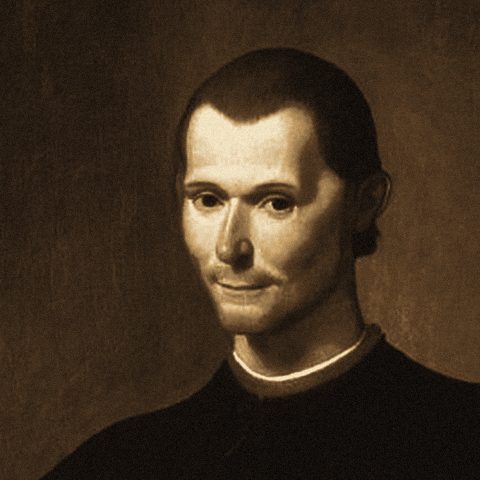
About the author
Niccolò Machiavelli
1469 Florence – 1527 Sant'Andrea in Percussina · Florentine statesman, diplomat, and political theorist
Niccolò di Bernardo dei Machiavelli was a Florentine diplomat, author, philosopher, and historian who lived during the Italian Renaissance. He is best known for his political treatise The Prince, written around 1513 but not published until 1532, five years after his death.
- 1469Born, Florence
- 1527Died, Sant'Andrea in Percussina
- 1531Discourses on the First Decade of Titus Livius
- 1532The Prince
If you like Discourses on the First Decade of Titus Livius
More like this


Start with chapter 2
2 chapters free right now — no account. Your place follows you to iPhone and Android.