

Chapter 1 freeNo account needed.
Opens part 1 in the player · no sign-up needed
Things are said to be named 'equivocally' when, though they have a common name, the definition corresponding with the name differs for each.
The Categories is a text from Aristotle's Organon that enumerates all the possible kinds of things that can be the subject or the predicate of a proposition.
Inside the book
- Free nowno account · 1 chapter
- 1Part 11 min
- Premium14 chapters · every book, 7 days free
- 2Part 21 min
- 3Part 31 min
- 4Part 41 min
- 5Part 514 min
- 6Part 69 min
- 7Part 713 min
- 8Part 814 min
- 9Part 91 min
- 10Part 1013 min
- 11Part 112 min
- 12Part 122 min
- 13Part 132 min
- 14Part 142 min
- 15Part 151 min
The opening
Part 1
Things are said to be named 'equivocally' when, though they have a common name, the definition corresponding with the name differs for each. Thus, a real man and a figure in a picture can both lay claim to the name 'animal'; yet these are equivocally so named, for, though they have a common name, the definition corresponding with the name differs for each. For should any one define in what sense each is an animal, his definition in the one case will be appropriate to that case only.
On the other hand, things are said to be named 'univocally' which have both the name and the definition answering to the name in common. A man and an ox are both 'animal', and these are univocally so named, inasmuch as not only the name, but also the definition, is the same in both cases: for if a man should state in what sense each is an animal, the statement in the one case would be identical with that in the other.
Things are said to be named 'derivatively', which derive their name from some other name, but differ from it in termination. Thus the grammarian derives his name from the word 'grammar', and the courageous man from the word 'courage'.
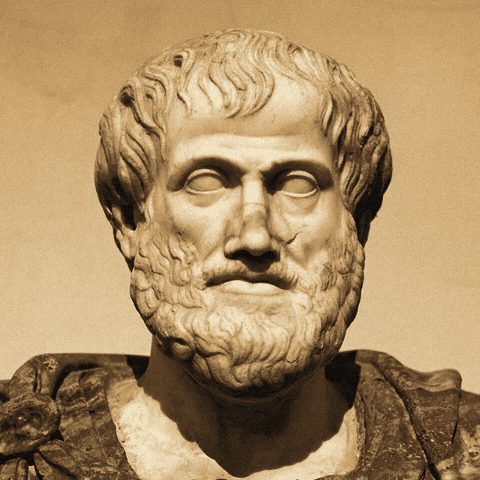
About the author
Aristotle
384 BC Stageira – 322 BC Chalcis · Greek philosopher
Aristotle was an ancient Greek philosopher and polymath. His writings span the natural sciences, philosophy, linguistics, economics, politics, psychology, and the arts.
More by Aristotle
Keep going with Aristotle


If you like The Categories
More like this


Start with part 1
First chapter free right now — no account. Your place follows you to iPhone and Android.