

2 chapters freeNo account needed.
Opens “An Essay Concerning the True Original, Extent and En...” in the player · no sign-up needed
Two Treatises of Government is John Locke's principal work of political philosophy, published anonymously in 1689 following the Glorious Revolution.
Inside the book
- Free nowno account · 2 chapters
- —Preface4 min
- 1An Essay Concerning the True Original, Extent and En...3 min
- Premium18 chapters · every book, 7 days free
- 2Of the State of Nature15 min
- 3Of the State of War7 min
- 4Of Slavery3 min
- 5Of Property30 min
- 6Of Paternal Power31 min
- 7Of Political or Civil Society23 min
- 8Of the Beginning of Political Societies34 min
- 9Of the Ends of Political Society and Government7 min
- 10Of the Forms of A Common-Wealth2 min
- 11Of the Extent of the Legislative Power16 min
- 12Of the Legislative, Executive, and Federative Power...4 min
- 13Of the Subordination of the Powers of the Common-Wealth15 min
- 14Of Prerogative11 min
- 15Of Paternal, Political, and Despotical Power, Consid...7 min
- 16Of Conquest24 min
- 17Of Usurpation2 min
- 18Of Tyranny14 min
- 19Of the Dissolution of Government44 min
The opening
An Essay Concerning the True Original, Extent and En...
An Essay Concerning The True Original, Extent And End Of Civil Government
Sect. 1. It having been shewn in the foregoing discourse,
(1). That Adam had not, either by natural right of fatherhood, or by positive donation from God, any such authority over his children, or dominion over the world, as is pretended:
(2). That if he had, his heirs, yet, had no right to it:
(3). That if his heirs had, there being no law of nature nor positive law of God that determines which is the right heir in all cases that may arise, the right of succession, and consequently of bearing rule, could not have been certainly determined:
(4). That if even that had been determined, yet the knowledge of which is the eldest line of Adam's posterity, being so long since utterly lost, that in the races of mankind and families of the world, there remains not to one above another, the least pretence to be the eldest house, and to have the right of inheritance:
All these premises having, as I think, been clearly made out, it is impossible that the rulers now on earth should make any benefit, or derive any the least shadow of authority from that, which is held to be the fountain of all power, Adam's private dominion and paternal jurisdiction; so that he that will not give just occasion to think that all government in the world is the product only of force and violence, and that men live together by no other rules but that of beasts, where the strongest carries it, and so lay a foundation for perpetual disorder and mischief, tumult, sedition and rebellion, (things that the followers of that hypothesis so loudly cry out against) must of necessity find out another rise of government, another original of political power, and another way of designing and knowing the persons that have it, than what Sir Robert Filmer hath taught us.
Sect. 2. To this purpose, I think it may not be amiss, to set down what I take to be political power; that the power of a MAGISTRATE over a subject may be distinguished from that of a FATHER over his children, a MASTER over his servant, a HUSBAND over his wife, and a LORD over his slave. All which distinct powers happening sometimes together in the same man, if he be considered under these different relations, it may help us to distinguish these powers one from wealth, a father of a family, and a captain of a galley.
Sect. 3. POLITICAL POWER, then, I take to be a RIGHT of making laws with penalties of death, and consequently all less penalties, for the regulating and preserving of property, and of employing the force of the community, in the execution of such laws, and in the defence of the commonwealth from foreign injury; and all this only for the public good.
About the author
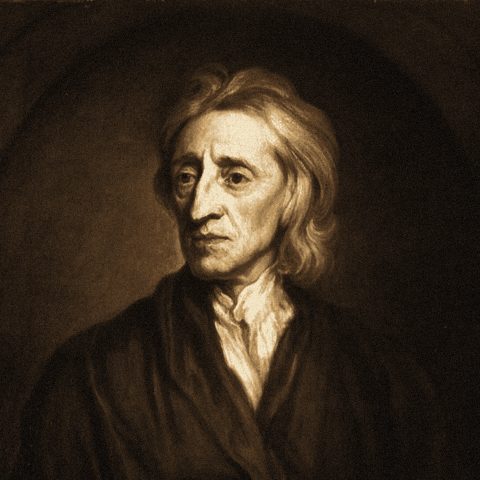
John Locke
1632 Wrington – 1704 High Laver · English philosopher and physician
John Locke was an English philosopher and physician, widely regarded as one of the most influential of the Enlightenment thinkers and commonly known as the "father of liberalism". His important works include A Letter Concerning Toleration (1689), Two Treatises of Government (1689/90), both published anonymously, and An Essay Concerning Human Understanding (1689/90).
- 1632Born, Wrington
- 1690Second Treatise of Government
- 1690An Essay Concerning Human Understanding, Volume 1
- 1690An Essay Concerning Human Understanding, Volume 2
- 1704Died, High Laver
If you like Second Treatise of Government
More like this


Start with “An Essay Concerning the True Original, Extent and En...”
2 chapters free right now — no account. Your place follows you to iPhone and Android.