

Chapter 1 freeNo account needed.
Opens “Maslova in Prison” in the player · no sign-up needed
The book is the final of his major long fiction works published in his lifetime.
Inside the book
- Free nowno account · 1 chapter
- 1Maslova in Prison6 min
- Premium128 chapters · every book, 7 days free
- 2Maslova's Early Life10 min
- 3Nekhludoff10 min
- 4Missy. When Nekhludoff had finished his coffee, he w...5 min
- 5The Jurymen5 min
- 6The Judges6 min
- 7The Officials of the Court6 min
- 8Swearing in the Jury6 min
- 9The Trial—The Prisoners Questioned7 min
- 10The Trial—The Indictment6 min
- 11The Trial—Maslova Cross-Examined12 min
- 12Twelve Years Before9 min
- 13Life in the Army8 min
- 14The Second Meeting with Maslova8 min
- 15The Early Mass9 min
- 16The First Step6 min
- 17Nekhludoff and Katusha5 min
- 18Afterwards5 min
- 19The Trial—Resumption5 min
- 20The Trial—The Medical Report7 min
- 21The Trial—The Prosecutor and the Advocates10 min
- 22The Trial—The Summing Up6 min
- 23The Trial—The Verdict15 min
- 24The Trial—The Sentence6 min
- 25Nekhludoff Consults an Advocate3 min
- 26The House of Korchagin10 min
- 27Missy's Mother10 min
- 28The Awakening12 min
- 29Maslova in Prison6 min
- 30The Cell. The cell in which Maslova was imprisoned w...6 min
- 31The Prisoners6 min
- 32A Prison Quarrel8 min
- 33The Leaven at Work—Nekhludoff's Domestic Changes7 min
- 34The Absurdity of Law—Reflections of A Juryman10 min
- 35The Procureur—Nekhludoff Refuses to Serve5 min
- 36Nekhludoff Endeavours to Visit Maslova4 min
- 37Maslova Recalls the Past7 min
- 38Sunday in Prison—Preparing for Mass4 min
- 39The Prison Church—Blind Leaders of the Blind7 min
- 40The Husks of Religion5 min
- 41Visiting Day—The Men's Ward9 min
- 42Visiting Day—The Women's Ward4 min
- 43Nekhludoff Visits Maslova10 min
- 44Maslova's View of Life4 min
- 45Fanarin, the Advocate—The Petition13 min
- 46A Prison Flogging6 min
- 47Nekhludoff Again Visits Maslova5 min
- 48Maslova Refuses to Marry6 min
- 49Vera Doukhova6 min
- 50The Vice-Governor of the Prison7 min
- 51Chapter 516 min
- 52No. 21. "May I look in?" asked Nekhludoff4 min
- 53Victims of Government5 min
- 54Prisoners and Friends5 min
- 55Vera Doukhova Explains4 min
- 56Nekhludoff and the Prisoners5 min
- 57The Vice-Governor's "At-Home"8 min
- 58The Vice-Governor Suspicious5 min
- 59Nekhludoff's Third Interview with Maslova in Prison8 min
- 60Book 2, Chapter 1: Property in Land11 min
- 61Book 2, Chapter 2: Efforts at Land Restoration8 min
- 62Book 2, Chapter 3: Old Associations5 min
- 63Book 2, Chapter 4: The Peasants' Lot8 min
- 64Book 2, Chapter 5: Maslova's Aunt7 min
- 65Book 2, Chapter 6: Reflections of A Landlord11 min
- 66Book 2, Chapter 7: The Disinherited7 min
- 67Book 2, Chapter 8: God's Peace in the Heart6 min
- 68Book 2, Chapter 9: The Land Settlement12 min
- 69Book 2, Chapter 10: Nekhludoff Returns to Town8 min
- 70Chapter 704 min
- 71Book 2, Chapter 12: Why the Peasants Flock to Town4 min
- 72Book 2, Chapter 13: Nurse Maslova11 min
- 73Book 2, Chapter 14: An Aristocratic Circle10 min
- 74Book 2, Chapter 15: An Average Statesman10 min
- 75Book 2, Chapter 16: An Up-To-Date Senator8 min
- 76Chapter 766 min
- 77Book 2, Chapter 18: Officialdom6 min
- 78Book 2, Chapter 19: An Old General of Repute12 min
- 79Book 2, Chapter 20: Maslova's Appeal7 min
- 80Book 2, Chapter 21: The Appeal Dismissed7 min
- 81Book 2, Chapter 22: An Old Friend5 min
- 82Book 2, Chapter 23: The Public Prosecutor8 min
- 83Book 2, Chapter 24: Mariette Tempts Nekhludoff13 min
- 84Book 2, Chapter 25: Lydia Shoustova's Home8 min
- 85Book 2, Chapter 26: Lydia's Aunt3 min
- 86Book 2, Chapter 27: The State Church and the People12 min
- 87Book 2, Chapter 28: The Meaning of Mariette's Attraction8 min
- 88Book 2, Chapter 29: For Her Sake and for God's11 min
- 89Chapter 8910 min
- 90Book 2, Chapter 31: Nekhludoff's Sister and Her Husband5 min
- 91Book 2, Chapter 32: Nekhludoff's Anarchism10 min
- 92Book 2, Chapter 33: The Aim of the Law7 min
- 93Book 2, Chapter 34: The Prisoners Start for Siberia10 min
- 94Chapter 947 min
- 95Book 2, Chapter 36: The Tender Mercies of the Lord9 min
- 96Book 2, Chapter 37: Spilled Like Water on the Ground9 min
- 97Book 2, Chapter 38: The Convict Train6 min
- 98Book 2, Chapter 39: Brother and Sister10 min
- 99Book 2, Chapter 40: The Fundamental Law of Human Life9 min
- 100Book 2, Chapter 41: Taras's Story12 min
- 101Book 2, Chapter 42: Le Vrai Grand Monde8 min
- 102Book 3, Chapter 1: Maslova Makes New Friends6 min
- 103Book 3, Chapter 2: An Incident of the March5 min
- 104Book 3, Chapter 3: Mary Pavlovna5 min
- 105Chapter 1055 min
- 106Book 3, Chapter 5: The Political Prisoners8 min
- 107Book 3, Chapter 6: Kryltzoff's Story9 min
- 108Chapter 1085 min
- 109Book 3, Chapter 8: Nekhludoff and the Officer7 min
- 110Book 3, Chapter 9: The Political Prisoners4 min
- 111Book 3, Chapter 10: Makar Devkin3 min
- 112Book 3, Chapter 11: Maslova and Her Companions7 min
- 113Book 3, Chapter 12: Nabatoff and Markel10 min
- 114Book 3, Chapter 13: Love Affairs of the Exiles5 min
- 115Book 3, Chapter 14: Conversations in Prison4 min
- 116Book 3, Chapter 15: Novodvoroff4 min
- 117Book 3, Chapter 16: Simonson Speaks to Nekhludoff7 min
- 118Chapter 1184 min
- 119Book 3, Chapter 18: Neveroff's Fate6 min
- 120Book 3, Chapter 19: Why Is It Done?10 min
- 121Book 3, Chapter 20: The Journey Resumed7 min
- 122Chapter 1225 min
- 123Book 3, Chapter 22: Nekhludoff Sees the General8 min
- 124Book 3, Chapter 23: The Sentence Commuted6 min
- 125Book 3, Chapter 24: The General's Household10 min
- 126Book 3, Chapter 25: Maslova's Decision6 min
- 127Book 3, Chapter 26: The English Visitor3 min
- 128Book 3, Chapter 27: Kryltzoff at Rest5 min
- 129Book 3, Chapter 28: A New Life Dawns for Nekhludoff12 min
The opening
Maslova in Prison
Maslova In Prison.
Though hundreds of thousands had done their very best to disfigure the small piece of land on which they were crowded together, by paving the ground with stones, scraping away every vestige of vegetation, cutting down the trees, turning away birds and beasts, and filling the air with the smoke of naphtha and coal, still spring was spring, even in the town.
The sun shone warm, the air was balmy; everywhere, where it did not get scraped away, the grass revived and sprang up between the paving-stones as well as on the narrow strips of lawn on the boulevards. The birches, the poplars, and the wild cherry unfolded their gummy and fragrant leaves, the limes were expanding their opening buds; crows, sparrows, and pigeons, filled with the joy of spring, were getting their nests ready; the flies were buzzing along the walls, warmed by the sunshine. All were glad, the plants, the birds, the insects, and the children. But men, grown-up men and women, did not leave off cheating and tormenting themselves and each other. It was not this spring morning men thought sacred and worthy of consideration not the beauty of God's world, given for a joy to all creatures, this beauty which inclines the heart to peace, to harmony, and to love, but only their own devices for enslaving one another.
Thus, in the prison office of the Government town, it was not the fact that men and animals had received the grace and gladness of spring that was considered sacred and important, but that a notice, numbered and with a superscription, had come the day before, ordering that on this 28th day of April, at 9 a.m., three prisoners at present detained in the prison, a man and two women (one of these women, as the chief criminal, to be conducted separately), had to appear at Court. So now, on the 28th of April, at 8 o'clock, a jailer and soon after him a woman warder with curly grey hair, dressed in a jacket with sleeves trimmed with gold, with a blue-edged belt round her waist, and having a look of suffering on her face, came into the corridor.
"You want Maslova?" she asked, coming up to the cell with the jailer who was on duty.
The jailer, rattling the iron padlock, opened the door of the cell, from which there came a whiff of air fouler even than that in the corridor, and called out, "Maslova! to the Court," and closed the door again.
Even into the prison yard the breeze had brought the fresh vivifying air from the fields. But in the corridor the air was laden with the germs of typhoid, the smell of sewage, putrefaction, and tar; every newcomer felt sad and dejected in it. The woman warder felt this, though she was used to bad air. She had just come in from outside, and entering the corridor, she at once became sleepy.
From inside the cell came the sound of bustle and women's voices, and the patter of bare feet on the floor.
"Now, then, hurry up, Maslova, I say!" called out the jailer, and in a minute or two a small young woman with a very full bust came briskly out of the door and went up to the jailer. She had on a grey cloak over a white jacket and petticoat. On her feet she wore linen stockings and prison shoes, and round her head was tied a white kerchief, from under which a few locks of black hair were brushed over the forehead with evident intent. The face of the woman was of that whiteness peculiar to people who have lived long in confinement, and which puts one in mind of shoots of potatoes that spring up in a cellar. Her small broad hands and full neck, which showed from under the broad collar of her cloak, were of the same hue. Her black, sparkling eyes, one with a slight squint, appeared in striking contrast to the dull pallor of her face.
She carried herself very straight, expanding her full bosom.
With her head slightly thrown back, she stood in the corridor, looking straight into the eyes of the jailer, ready to comply with any order.
The jailer was about to lock the door when a wrinkled and severe-looking old woman put out her grey head and began speaking to Maslova. But the jailer closed the door, pushing the old woman's head with it. A woman's laughter was heard from the cell, and Maslova smiled, turning to the little grated opening in the cell door. The old woman pressed her face to the grating from the other side, and said, in a hoarse voice:
"Now mind, and when they begin questioning you, just repeat over the same thing, and stick to it; tell nothing that is not wanted."
"Well, it could not be worse than it is now, anyhow; I only wish it was settled one way or another."
"Of course, it will be settled one way or another," said the jailer, with a superior's self-assured witticism. "Now, then, get along! Take your places!"
The old woman's eyes vanished from the grating, and Maslova stepped out into the middle of the corridor. The warder in front, they descended the stone stairs, past the still fouler, noisy cells of the men's ward, where they were followed by eyes looking out of every one of the gratings in the doors, and entered the office, where two soldiers were waiting to escort her. A clerk who was sitting there gave one of the soldiers a paper reeking of tobacco, and pointing to the prisoner, remarked, "Take her."
The soldier, a peasant from Nijni Novgorod, with a red, pock-marked face, put the paper into the sleeve of his coat, winked to his companion, a broad-shouldered Tchouvash, and then the prisoner and the soldiers went to the front entrance, out of the prison yard, and through the town up the middle of the roughly-paved street.
Isvostchiks [cabmen], tradespeople, cooks, workmen, and government clerks, stopped and looked curiously at the prisoner; some shook their heads and thought, "This is what evil conduct, conduct unlike ours, leads to." The children stopped and gazed at the robber with frightened looks; but the thought that the soldiers were preventing her from doing more harm quieted their fears. A peasant, who had sold his charcoal, and had had some tea in the town, came up, and, after crossing himself, gave her a copeck. The prisoner blushed and muttered something; she noticed that she was attracting everybody's attention, and that pleased her. The comparatively fresh air also gladdened her, but it was painful to step on the rough stones with the ill-made prison shoes on her feet, which had become unused to walking. Passing by a corn-dealer's shop, in front of which a few pigeons were strutting about, unmolested by any one, the prisoner almost touched a grey-blue bird with her foot; it fluttered up and flew close to her ear, fanning her with its wings. She smiled, then sighed deeply as she remembered her present position.
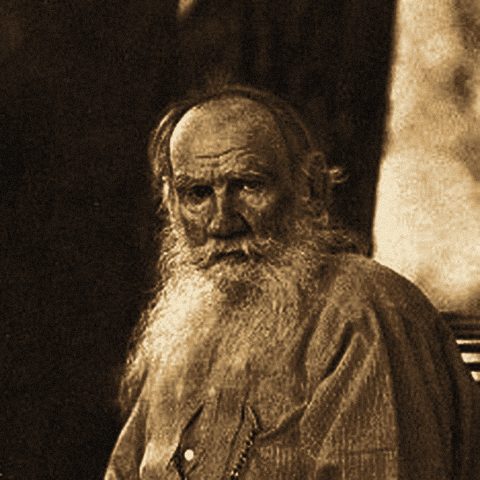
About the author
Leo Tolstoy
1828 Yasnaya Polyana – 1910 Astapovo · Russian author
Count Lev Nikolayevich Tolstoy, usually referred to in English as Leo Tolstoy, was a Russian writer. He is regarded as one of the greatest and most influential authors of all time.
- 1828Born, Yasnaya Polyana
- 1863The Cossacks
- 1869War and Peace
- 1877Anna Karenina
- 1889The Kreutzer Sonata
- 1899Resurrection
- 1910Died, Astapovo
More by Leo Tolstoy
Keep going with Tolstoy


If you like Resurrection
More like this


Start with “Maslova in Prison”
First chapter free right now — no account. Your place follows you to iPhone and Android.