

2 chapters freeNo account needed.
Opens “Anthony M. Ludovici” in the player · no sign-up needed
To maintain a cheerful attitude of mind in the midst of a gloomy and exceedingly responsible task, is no slight artistic feat.
Twilight of the Idols, or, How to Philosophize with a Hammer is a book by Friedrich Nietzsche, written in 1888, and published in 1889.
Inside the book
- Free nowno account · 2 chapters
- —Introduction7 min
- 1Anthony M. Ludovici3 min
- Premium12 chapters · every book, 7 days free
- 2Maxims and Missiles7 min
- 3The Problem of Socrates21 min
- 4The History of an Error2 min
- 5Morality as the Enemy of Nature11 min
- 6The Four Great Errors24 min
- 7Things the Germans Lack14 min
- 9Things I Owe to the Ancients14 min
- 10The Antichrist2 min
- 12Translator’s Preface3 min
- 13I. Eternal Recurrence53 min
The opening
Anthony M. Ludovici
Preface
To maintain a cheerful attitude of mind in the midst of a gloomy and exceedingly responsible task, is no slight artistic feat. And yet, what could be more necessary than cheerfulness? Nothing ever succeeds which exuberant spirits have not helped to produce. Surplus power, alone, is the proof of power.—A transvaluation of all values,—this note of interrogation which is so black, so huge, that it casts a shadow even upon him who affixes it,—is a task of such fatal import, that he who undertakes it is compelled every now and then to rush out into the sunlight in order to shake himself free from an earnestness that becomes crushing, far too crushing. This end justifies every means, every event on the road to it is a windfall. Above all war. War has always been the great policy of all spirits who have penetrated too far into themselves or who have grown too deep; a wound stimulates the recuperative powers. For many years, a maxim, the origin of which I withhold from learned curiosity, has been my motto:
increscunt animi, virescit volnere virtus.
At other times another means of recovery which is even more to my taste, is to cross-examine idols. There are more idols than realities in the world: this constitutes my "evil eye" for this world: it is also my "evil ear." To put questions in this quarter with a hammer, and to hear perchance that well-known hollow sound which tells of blown-out frogs,—what a joy this is for one who has ears even behind his ears, for an old psychologist and Pied Piper like myself in whose presence precisely that which would fain be silent, must betray itself.
Even this treatise—as its title shows—is above all a recreation, a ray of sunshine, a leap sideways of a psychologist in his leisure moments. Maybe, too, a new war? And are we again cross-examining new idols? This little work is a great declaration of war; and with regard to the cross-examining of idols, this time it is not the idols of the age but eternal idols which are here struck with a hammer as with a tuning fork,—there are certainly no idols which are older, more convinced, and more inflated. Neither are there any more hollow. This does not alter the fact that they are believed in more than any others, besides they are never called idols,—at least, not the most exalted among their number.
FRIEDRICH NIETZSCHE.
TURIN, the 30th September 1888. on the day when the first book of the Transvaluation of all Values was finished.
About the author
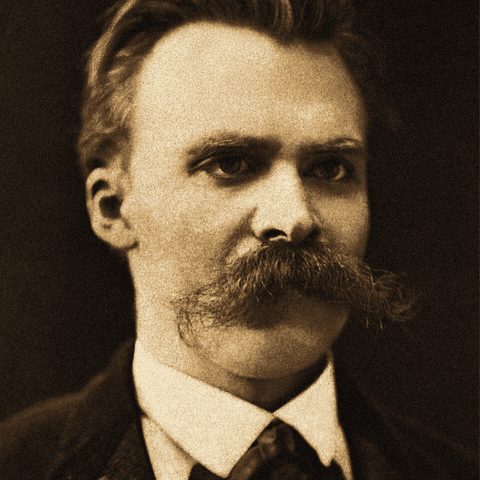
Friedrich Wilhelm Nietzsche
1844 Röcken – 1900 Weimar · German philosopher
Friedrich Wilhelm Nietzsche was a German philosopher and writer who started his career as a classical philologist and turned to philosophy early in his academic career. In 1869, at age 24, he was appointed Professor of Classical Philology at the University of Basel.
- 1844Born, Röcken
- 1872The Birth of Tragedy
- 1878Human, All Too Human
- 1881The Dawn of Day
- 1882The Joyful Wisdom
- 1889Twilight of the Idols
- 1908Ecce Homo
More by Friedrich Wilhelm Nietzsche
Keep going with Nietzsche


If you like Twilight of the Idols
More like this


Start with “Anthony M. Ludovici”
2 chapters free right now — no account. Your place follows you to iPhone and Android.