

2 chapters freeNo account needed.
Opens “When I was a small boy at the beginning of the centu...” in the player · no sign-up needed
Written between 1873 and 1884, it traces four generations of the Pontifex family.
Inside the book
- Free nowno account · 2 chapters
- —Preface1 min
- 1When I was a small boy at the beginning of the centu...10 min
- Premium85 chapters · every book, 7 days free
- 2Old Mr Pontifex had married in the year 1750, but fo...8 min
- 3In the early years of the century five little childr...7 min
- 4In a year or two more came Waterloo and the European...8 min
- 5Fortune, we are told, is a blind and fickle foster-m...11 min
- 6Mr Pontifex was not the man to trouble himself much...10 min
- 7A few words may suffice for the greater number of th...8 min
- 8Mr Pontifex had set his heart on his son's becoming...9 min
- 9Mr Allaby was rector of Crampsford, a village a few...6 min
- 10The interview, like all other good things had to com...6 min
- 11The next morning saw Theobald in his rooms coaching...10 min
- 12Theobald's engagement was all very well as far as it...13 min
- 13A due number of old shoes had been thrown at the car...11 min
- 14Battersby-On-The-Hill was the name of the village of...8 min
- 15The hymn had engaged my attention; when it was over...5 min
- 16He does not like this branch of his profession—indee...12 min
- 17In the course of time this sorrow was removed5 min
- 18For the first time in his life Theobald felt that he...11 min
- 19This much, however, we may say in the meantime, that...10 min
- 20The birth of his son opened Theobald's eyes to a goo...6 min
- 21Strange! for she believed she doted upon him, and ce...6 min
- 22I used to stay at Battersby for a day or two sometim...9 min
- 23The man-servant William came and set the chairs for...8 min
- 24The storm which I have described in the previous cha...6 min
- 25Three or four years after the birth of her daughter...5 min
- 26The foregoing letter shows how much greater was Chri...6 min
- 27I will give no more of the details of my hero's earl...11 min
- 28Ernest had heard awful accounts of Dr Skinner's temp...11 min
- 29Soon after his father and mother had left him Ernest...12 min
- 30Next morning Theobald and Christina arose feeling a...6 min
- 31With the masters Ernest was ere long in absolute dis...6 min
- 32I must now return to Miss Alethea Pontifex, of whom...9 min
- 33Next day Miss Pontifex returned to town, with her th...10 min
- 34Miss Pontifex soon found out that Ernest did not lik...10 min
- 35All went well for the first part of the following ha...9 min
- 36Letters had been written to Miss Pontifex's brothers...6 min
- 37If Theobald and Christina had not been too well plea...12 min
- 38Ernest was thus in disgrace from the beginning of th...8 min
- 39Ernest had been out all the morning, but came in to...9 min
- 40When Ernest got home and sneaked in through the back...13 min
- 41Long before Ernest reached the dining-room his ill-d...11 min
- 42About a week before he went back to school his fathe...8 min
- 43So important did Theobald consider this matter that...7 min
- 44I may spare the reader more details about my hero's...10 min
- 45Some people say that their school days were the happ...9 min
- 46When he was in his third year a magazine was founded...10 min
- 47Ernest returned to Cambridge for the May term of 185...8 min
- 48Once, recently, when he was down at home after takin...14 min
- 49On his return to Cambridge in the May term of 1858...15 min
- 50Ernest felt now that the turning point of his life h...10 min
- 51Ernest had been ordained to a curacy in one of the c...6 min
- 52"You know, my dear Pontifex," said Pryer to him, som...9 min
- 53The foregoing conversation and others like it made a...9 min
- 54This move on Ernest's part was variously commented u...5 min
- 55I had called on Ernest as a matter of course when he...12 min
- 56By and by a subtle, indefinable malaise began to tak...5 min
- 57He had hardly parted from Pryer before there occurre...6 min
- 58Next day he felt stronger again8 min
- 59Before going down into the kitchen to convert the ti...8 min
- 60Ernest now went home and occupied himself till lunch...5 min
- 61Pryer had done well to warn Ernest against promiscuo...9 min
- 62This advice, besides being obviously sensible, would...5 min
- 63I saw my solicitor at once, but when I tried to writ...6 min
- 64After Ernest had been sentenced, he was taken back t...8 min
- 65As he lay on his bed day after day slowly recovering...10 min
- 66Ernest was now so far convalescent as to be able to...10 min
- 67As soon as Ernest found that he had no money to look...9 min
- 68When I think over all that Ernest told me about his...11 min
- 69In coming to the conclusion that he would sever the...10 min
- 70I had begun to like him on the night Towneley had se...9 min
- 71It seems he had been patrolling the streets for the...10 min
- 72Ernest told Ellen of his difficulty about finding em...22 min
- 73Ellen and he got on capitally, all the better, perha...8 min
- 74About six months after he had set up his shop his pr...5 min
- 75In the month of September 1860 a girl was born, and...11 min
- 76The winter had been a trying one5 min
- 77I do not think Ernest himself was much more pleased...7 min
- 78Ernest was now well turned twenty-six years old, and...11 min
- 79The question now arose what was to be done with the...8 min
- 80We left by the night mail, crossing from Dover14 min
- 81So he fell away from all old friends except myself a...9 min
- 82It almost seemed as though our casual mention of The...11 min
- 83Joey and Charlotte were in the room31 min
- 84On our way to town Ernest broached his plans for spe...11 min
- 85Ernest being about two and thirty years old and havi...11 min
- 86And now I must bring my story to a close25 min
The opening
When I was a small boy at the beginning of the centu...
When I was a small boy at the beginning of the century I remember an old man who wore knee-breeches and worsted stockings, and who used to hobble about the street of our village with the help of a stick. He must have been getting on for eighty in the year 1807, earlier than which date I suppose I can hardly remember him, for I was born in 1802. A few white locks hung about his ears, his shoulders were bent and his knees feeble, but he was still hale, and was much respected in our little world of Paleham. His name was Pontifex.
His wife was said to be his master; I have been told she brought him a little money, but it cannot have been much. She was a tall, square-shouldered person (I have heard my father call her a Gothic woman) who had insisted on being married to Mr Pontifex when he was young and too good-natured to say nay to any woman who wooed him. The pair had lived not unhappily together, for Mr Pontifex's temper was easy and he soon learned to bow before his wife's more stormy moods.
Mr Pontifex was a carpenter by trade; he was also at one time parish clerk; when I remember him, however, he had so far risen in life as to be no longer compelled to work with his own hands. In his earlier days he had taught himself to draw. I do not say he drew well, but it was surprising he should draw as well as he did. My father, who took the living of Paleham about the year 1797, became possessed of a good many of old Mr Pontifex's drawings, which were always of local subjects, and so unaffectedly painstaking that they might have passed for the work of some good early master. I remember them as hanging up framed and glazed in the study at the Rectory, and tinted, as all else in the room was tinted, with the green reflected from the fringe of ivy leaves that grew around the windows. I wonder how they will actually cease and come to an end as drawings, and into what new phases of being they will then enter.
Not content with being an artist, Mr Pontifex must needs also be a musician. He built the organ in the church with his own hands, and made a smaller one which he kept in his own house. He could play as much as he could draw, not very well according to professional standards, but much better than could have been expected. I myself showed a taste for music at an early age, and old Mr Pontifex on finding it out, as he soon did, became partial to me in consequence.
It may be thought that with so many irons in the fire he could hardly be a very thriving man, but this was not the case. His father had been a day labourer, and he had himself begun life with no other capital than his good sense and good constitution; now, however, there was a goodly show of timber about his yard, and a look of solid comfort over his whole establishment. Towards the close of the eighteenth century and not long before my father came to Paleham, he had taken a farm of about ninety acres, thus making a considerable rise in life. Along with the farm there went an old-fashioned but comfortable house with a charming garden and an orchard. The carpenter's business was now carried on in one of the outhouses that had once been part of some conventual buildings, the remains of which could be seen in what was called the Abbey Close. The house itself, embosomed in honeysuckles and creeping roses, was an ornament to the whole village, nor were its internal arrangements less exemplary than its outside was ornamental. Report said that Mrs Pontifex starched the sheets for her best bed, and I can well believe it.
How well do I remember her parlour half filled with the organ which her husband had built, and scented with a withered apple or two from the pyrus japonica that grew outside the house; the picture of the prize ox over the chimney-piece, which Mr Pontifex himself had painted; the transparency of the man coming to show light to a coach upon a snowy night, also by Mr Pontifex; the little old man and little old woman who told the weather; the china shepherd and shepherdess; the jars of feathery flowering grasses with a peacock's feather or two among them to set them off, and the china bowls full of dead rose leaves dried with bay salt. All has long since vanished and become a memory, faded but still fragrant to myself.
Nay, but her kitchen—and the glimpses into a cavernous cellar beyond it, wherefrom came gleams from the pale surfaces of milk cans, or it may be of the arms and face of a milkmaid skimming the cream; or again her storeroom, where among other treasures she kept the famous lipsalve which was one of her especial glories, and of which she would present a shape yearly to those whom she delighted to honour. She wrote out the recipe for this and gave it to my mother a year or two before she died, but we could never make it as she did. When we were children she used sometimes to send her respects to my mother, and ask leave for us to come and take tea with her. Right well she used to ply us. As for her temper, we never met such a delightful old lady in our lives; whatever Mr Pontifex may have had to put up with, we had no cause for complaint, and then Mr Pontifex would play to us upon the organ, and we would stand round him open-mouthed and think him the most wonderfully clever man that ever was born, except of course our papa.
Mrs Pontifex had no sense of humour, at least I can call to mind no signs of this, but her husband had plenty of fun in him, though few would have guessed it from his appearance. I remember my father once sent me down to his workship to get some glue, and I happened to come when old Pontifex was in the act of scolding his boy. He had got the lad—a pudding-headed fellow—by the ear and was saying, "What? Lost again—smothered o' wit." (I believe it was the boy who was himself supposed to be a wandering soul, and who was thus addressed as lost.) "Now, look here, my lad," he continued, "some boys are born stupid, and thou art one of them; some achieve stupidity—that's thee again, Jim—thou wast both born stupid and hast greatly increased thy birthright—and some" (and here came a climax during which the boy's head and ear were swayed from side to side) "have stupidity thrust upon them, which, if it please the Lord, shall not be thy case, my lad, for I will thrust stupidity from thee, though I have to box thine ears in doing so," but I did not see that the old man really did box Jim's ears, or do more than pretend to frighten him, for the two understood one another perfectly well. Another time I remember hearing him call the village rat-catcher by saying, "Come hither, thou three-days-and-three-nights, thou," alluding, as I afterwards learned, to the rat-catcher's periods of intoxication; but I will tell no more of such trifles. My father's face would always brighten when old Pontifex's name was mentioned. "I tell you, Edward," he would say to me, "old Pontifex was not only an able man, but he was one of the very ablest men that ever I knew."
This was more than I as a young man was prepared to stand. "My dear father," I answered, "what did he do? He could draw a little, but could he to save his life have got a picture into the Royal Academy exhibition? He built two organs and could play the Minuet in Samson on one and the March in Scipio on the other; he was a good carpenter and a bit of a wag; he was a good old fellow enough, but why make him out so much abler than he was?"
"My boy," returned my father, "you must not judge by the work, but by the work in connection with the surroundings. Could Giotto or Filippo Lippi, think you, have got a picture into the Exhibition? Would a single one of those frescoes we went to see when we were at Padua have the remotest chance of being hung, if it were sent in for exhibition now? Why, the Academy people would be so outraged that they would not even write to poor Giotto to tell him to come and take his fresco away. Phew!" continued he, waxing warm, "if old Pontifex had had Cromwell's chances he would have done all that Cromwell did, and have done it better; if he had had Giotto's chances he would have done all that Giotto did, and done it no worse; as it was, he was a village carpenter, and I will undertake to say he never scamped a job in the whole course of his life."
"But," said I, "we cannot judge people with so many 'ifs.' If old Pontifex had lived in Giotto's time he might have been another Giotto, but he did not live in Giotto's time."
"I tell you, Edward," said my father with some severity, "we must judge men not so much by what they do, as by what they make us feel that they have it in them to do. If a man has done enough either in painting, music or the affairs of life, to make me feel that I might trust him in an emergency he has done enough. It is not by what a man has actually put upon his canvas, nor yet by the acts which he has set down, so to speak, upon the canvas of his life that I will judge him, but by what he makes me feel that he felt and aimed at. If he has made me feel that he felt those things to be loveable which I hold loveable myself I ask no more; his grammar may have been imperfect, but still I have understood him; he and I are en rapport; and I say again, Edward, that old Pontifex was not only an able man, but one of the very ablest men I ever knew."
Against this there was no more to be said, and my sisters eyed me to silence. Somehow or other my sisters always did eye me to silence when I differed from my father.
"Talk of his successful son," snorted my father, whom I had fairly roused. "He is not fit to black his father's boots. He has his thousands of pounds a year, while his father had perhaps three thousand shillings a year towards the end of his life. He is a successful man; but his father, hobbling about Paleham Street in his grey worsted stockings, broad brimmed hat and brown swallow-tailed coat was worth a hundred of George Pontifexes, for all his carriages and horses and the airs he gives himself."
"But yet," he added, "George Pontifex is no fool either." And this brings us to the second generation of the Pontifex family with whom we need concern ourselves.
About the author
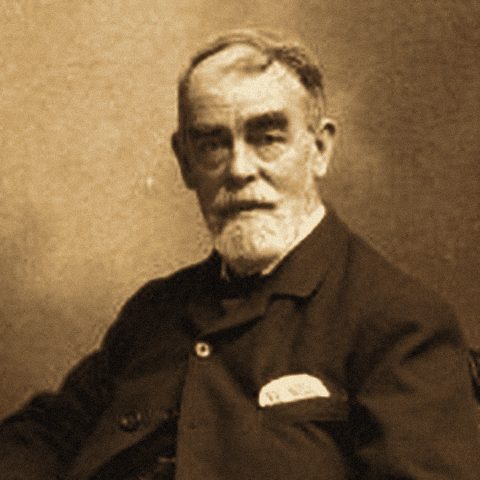
Samuel Butler
1835 Langar – 1902 · English novelist and critic
Samuel Butler was an English novelist and critic, best known for the satirical utopian novel Erewhon and the semi-autobiographical novel The Way of All Flesh. Both novels have remained in print since their initial publication.
- 1835Born, Langar
- 1872Erewhon
- 1903The Way of All Flesh
If you like The Way of All Flesh
More like this


Start with “When I was a small boy at the beginning of the centu...”
2 chapters free right now — no account. Your place follows you to iPhone and Android.