

Chapter 1 freeNo account needed.
Opens “The farm-like ground extended back very deeply up th...” in the player · no sign-up needed
The farm-like ground extended back very deeply up the hill, almost to Wheaton Street.
"The Shunned House" is a horror fiction novelette by American author H. P. Lovecraft, written on October 16–19, 1924. It was first published in the October 1937 issue of Weird Tales.
Inside the book
- Free nowno account · 1 chapter
- 1The farm-like ground extended back very deeply up th...6 min
- Premium4 chapters · every book, 7 days free
- 2Not till my adult years did my uncle set before me t...12 min
- 3It may well be imagined how powerfully I was affecte...13 min
- 4On Wednesday, June 25, 1919, after a proper notifica...14 min
- 5I had been lying with my face away from my uncle's c...11 min
The opening
The farm-like ground extended back very deeply up th...
The farm-like ground extended back very deeply up the hill, almost to Wheaton Street. The space south of the house, abutting on Benefit Street, was of course greatly above the existing sidewalk level, forming a terrace bounded by a high bank wall of damp, mossy stone pierced by a steep flight of narrow steps which led inward between canyon-like surfaces to the upper region of mangy lawn, rheumy brick walks, and neglected gardens whose dismantled cement urns, rusted kettles fallen from tripods of knotty sticks, and similar paraphernalia set off the weather-beaten front door with its broken fanlight, rotting Ionic pilasters, and wormy triangular pediment.
What I heard in my youth about the shunned house was merely that people died there in alarmingly great numbers. That, I was told, was why the original owners had moved out some twenty years after building the place. It was plainly unhealthy, perhaps because of the dampness and fungous growths in the cellar, the general sickish smell, the drafts of the hallways, or the quality of the well and pump water. These things were bad enough, and these were all that gained belief among the persons whom I knew. Only the notebooks of my antiquarian uncle, Doctor Elihu Whipple, revealed to me at length the darker, vaguer surmises which formed an undercurrent of folklore among old-time servants and humble folk; surmises which never travelled far, and which were largely forgotten when Providence grew to be a metropolis with a shifting modern population.
The general fact is, that the house was never regarded by the solid part of the community as in any real sense "haunted." There were no widespread tales of rattling chains, cold currents of air, extinguished lights, or faces at the window. Extremists sometimes said the house was "unlucky," but that is as far as even they went. What was really beyond dispute is that a frightful proportion of persons died there; or more accurately, had died there, since after some peculiar happenings over sixty years ago the building had become deserted through the sheer impossibility of renting it. These persons were not all cut off suddenly by any one cause; rather did it seem that their vitality was insidiously sapped, so that each one died the sooner from whatever tendency to weakness he may have naturally had. And those who did not die displayed in varying degree a type of anemia or consumption, and sometimes a decline of the mental faculties, which spoke ill for the salubriousness of the building. Neighboring houses, it must be added, seemed entirely free from the noxious quality.
This much I knew before my insistent questioning led my uncle to show me the notes which finally embarked us both on our hideous investigation. In my childhood the shunned house was vacant, with barren, gnarled and terrible old trees, long, queerly pale grass and nightmarishly misshapen weeds in the high terraced yard where birds never lingered. We boys used to overrun the place, and I can still recall my youthful terror not only at the morbid strangeness of this sinister vegetation, but at the eldritch atmosphere and odor of the dilapidated house, whose unlocked front door was often entered in quest of shudders. The small-paned windows were largely broken, and a nameless air of desolation hung round the precarious panelling, shaky interior shutters, peeling wall-paper, falling plaster, rickety staircases, and such fragments of battered furniture as still remained. The dust and cobwebs added their touch of the fearful; and brave indeed was the boy who would voluntarily ascend the ladder to the attic, a vast raftered length lighted only by small blinking windows in the gable ends, and filled with a massed wreckage of chests, chairs, and spinning-wheels which infinite years of deposit had shrouded and festooned into monstrous and hellish shapes.
But after all, the attic was not the most terrible part of the house. It was the dank, humid cellar which somehow exerted the strongest repulsion on us, even though it was wholly above ground on the street side, with only a thin door and window-pierced brick wall to separate it from the busy sidewalk. We scarcely knew whether to haunt it in spectral fascination, or to shun it for the sake of our souls and our sanity. For one thing, the bad odor of the house was strongest there; and for another thing, we did not like the white fungous growths which occasionally sprang up in rainy summer weather from the hard earth floor. Those fungi, grotesquely like the vegetation in the yard outside, were truly horrible in their outlines; detestable parodies of toadstools and Indian-pipes, whose like we had never seen in any other situation. They rotted quickly, and at one stage became slightly phosphorescent; so that nocturnal passers-by sometimes spoke of witch-fires glowing behind the broken panes of the fetor-spreading windows.
We never—even in our wildest Halloween moods—visited this cellar by night, but in some of our daytime visits could detect the phosphorescence, especially when the day was dark and wet. There was also a subtler thing we often thought we detected—a very strange thing which was, however, merely suggestive at most. I refer to a sort of cloudy whitish pattern on the dirt floor—a vague, shifting deposit of mold or niter which we sometimes thought we could trace amidst the sparse fungous growths near the huge fireplace of the basement kitchen. Once in a while it struck us that this patch bore an uncanny resemblance to a doubled-up human figure, though generally no such kinship existed, and often there was no whitish deposit whatever.
On a certain rainy afternoon when this illusion seemed phenomenally strong, and when, in addition, I had fancied I glimpsed a kind of thin, yellowish, shimmering exhalation rising from the nitrous pattern toward the yawning fireplace, I spoke to my uncle about the matter. He smiled at this odd conceit, but it seemed that his smile was tinged with reminiscence. Later I heard that a similar notion entered into some of the wild ancient tales of the common folk—a notion likewise alluding to ghoulish, wolfish shapes taken by smoke from the great chimney, and queer contours assumed by certain of the sinuous tree-roots that thrust their way into the cellar through the loose foundation-stones.
About the author
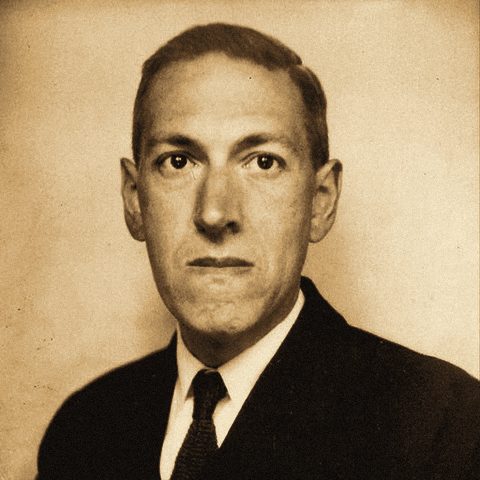
H. P. Lovecraft
1890 Providence – 1937 Providence · American writer and editor
Howard Phillips Lovecraft was an American writer of weird, horror, fantasy, and science fiction. He is best known for his creation of the Cthulhu Mythos, but his legacy is also apparent in terms like "Lovecraftian horror" and an enduring fandom.
- 1890Born, Providence
- 1928The Call of Cthulhu
- 1929The Dunwich Horror
- 1936At the Mountains of Madness
- 1937Died, Providence
- 1937The Shunned House
More by H. P. Lovecraft
Keep going with Lovecraft


If you like The Shunned House
More like this


Start with “The farm-like ground extended back very deeply up th...”
First chapter free right now — no account. Your place follows you to iPhone and Android.