
The Instinct of Workmanship, and the State of Industrial Arts
 Thorstein Veblen1857–1929
2 chapters freeNo account needed.
Opens “Preface” in the player · no sign-up needed
The Instinct of Workmanship and the State of the Industrial Arts is a 1914 book by the American economist Thorstein Veblen.
Inside the book
- Free nowno account · 2 chapters
- —Preface2 min
- 1Introductory52 min
- Premium12 chapters · every book, 7 days free
- 3Chapter 2, part 144 min
- 4Chapter 2, part 245 min
- 3The Savage State of the Industrial Arts46 min
- 6Chapter 4, part 136 min
- 7Chapter 4, part 236 min
- 8Chapter 5, part 131 min
- 9Chapter 5, part 232 min
- 6Part 1 of 2: The Era Of Handicraft49 min
- 11Chapter 649 min
- 7Part 1 of 3: The Machine Industry47 min
- 13Chapter 7, part 151 min
- 14Chapter 7, part 256 min
The opening
Preface
Preface
The following essay attempts an analysis of such correlation as is visible between industrial use and wont and those other institutional facts that go to make up any given phase of civilisation. It is assumed that in the growth of culture, as in its current maintenance, the facts of technological use and wont are fundamental and definitive, in the sense that they underlie and condition the scope and method of civilisation in other than the technological respect, but not in such a sense as to preclude or overlook the degree in which these other conventions of any given civilisation in their turn react on the state of the industrial arts.
The analysis proceeds on the materialistic assumptions of modern science, but without prejudice to the underlying question as to the ulterior competency of this materialistic conception considered as a metaphysical tenet. The inquiry simply accepts these mechanistic assumptions of material science for the purpose in hand, since these afford the currently acceptable terms of solution for any scientific problem of the kind in the present state of preconceptions on this head.
As should appear from its slight bulk, the essay is of the nature of a cursory survey rather than an exhaustive inquiry with full documentation. The few references given and the authorities cited in the course of the argument are accordingly not to be taken as an inclusive presentation of the materials on which the inquiry rests. It will also be remarked that where authoritative documents are cited the citation is general and extensive rather than specific and detailed. Wherever detailed references are given they will be found to bear on specific facts brought into the argument by way of illustrative detail.
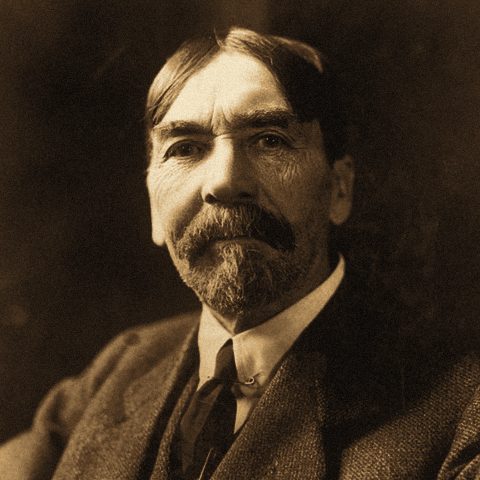
About the author
Thorstein Veblen
1857 Cato – 1929 Menlo Park · American economist and sociologist
Thorstein Bunde Veblen was an American economist and sociologist who, during his lifetime, emerged as a well-known critic of capitalism. In his best-known book, The Theory of the Leisure Class (1899), Veblen coined the concepts of conspicuous consumption and conspicuous leisure.
- 1857Born, Cato
- 1899The Theory of the Leisure Class
- 1929Died, Menlo Park
If you like The Instinct of Workmanship, and the State of Industrial Arts
More like this


Start with “Preface”
2 chapters free right now — no account. Your place follows you to iPhone and Android.