

2 chapters freeNo account needed.
Opens “The Library” in the player · no sign-up needed
I had just finished my studies at Oxford, and was taking a brief holiday from work before assuming definitely the management of the estate.
Lilith: A Romance is a fantasy novel by Scottish writer George MacDonald, first published in 1895. It was reprinted in paperback by Ballantine Books as the fifth volume of the Ballantine Adult Fantasy series in September 1969.
Inside the book
- Free nowno account · 2 chapters
- —Introduction2 min
- 1The Library9 min
- Premium46 chapters · every book, 7 days free
- 2The Mirror4 min
- 3The Raven13 min
- 4Somewhere or Nowhere?14 min
- 5The Old Church5 min
- 6The Sexton’s Cottage11 min
- 7The Cemetery12 min
- 8My Father’s Manuscript10 min
- 9I Repent10 min
- 10The Bad Burrow9 min
- 11The Evil Wood9 min
- 12Friends and Foes7 min
- 13The Little Ones17 min
- 14A Crisis9 min
- 15A Strange Hostess19 min
- 16A Gruesome Dance16 min
- 17A Grotesque Tragedy15 min
- 18Dead or Alive?17 min
- 19The White Leech11 min
- 20Gone!--But How?9 min
- 21The Fugitive Mother7 min
- 22Bulika8 min
- 23A Woman of Bulika5 min
- 24The White Leopardess7 min
- 25The Princess16 min
- 26A Battle Royal8 min
- 27The Silent Fountain7 min
- 28I Am Silenced6 min
- 29The Persian Cat14 min
- 30Adam Explains9 min
- 31The Sexton’s Old Horse10 min
- 32The Lovers and the Bags11 min
- 33Lona’s Narrative15 min
- 34Preparation11 min
- 35The Little Ones in Bulika10 min
- 36Mother and Daughter9 min
- 37The Shadow6 min
- 38To the House of Bitterness16 min
- 39That Night24 min
- 40The House of Death25 min
- 41I Am Sent8 min
- 42I Sleep the Sleep12 min
- 43The Dreams That Came17 min
- 44The Waking11 min
- 45The Journey Home8 min
- 46The City8 min
- 47The “Endless Ending”3 min
The opening
The Library
I had just finished my studies at Oxford, and was taking a brief holiday from work before assuming definitely the management of the estate. My father died when I was yet a child; my mother followed him within a year; and I was nearly as much alone in the world as a man might find himself.
I had made little acquaintance with the history of my ancestors. Almost the only thing I knew concerning them was, that a notable number of them had been given to study. I had myself so far inherited the tendency as to devote a good deal of my time, though, I confess, after a somewhat desultory fashion, to the physical sciences. It was chiefly the wonder they woke that drew me. I was constantly seeing, and on the outlook to see, strange analogies, not only between the facts of different sciences of the same order, or between physical and metaphysical facts, but between physical hypotheses and suggestions glimmering out of the metaphysical dreams into which I was in the habit of falling. I was at the same time much given to a premature indulgence of the impulse to turn hypothesis into theory. Of my mental peculiarities there is no occasion to say more.
The house as well as the family was of some antiquity, but no description of it is necessary to the understanding of my narrative. It contained a fine library, whose growth began before the invention of printing, and had continued to my own time, greatly influenced, of course, by changes of taste and pursuit. Nothing surely can more impress upon a man the transitory nature of possession than his succeeding to an ancient property! Like a moving panorama mine has passed from before many eyes, and is now slowly flitting from before my own.
The library, although duly considered in many alterations of the house and additions to it, had nevertheless, like an encroaching state, absorbed one room after another until it occupied the greater part of the ground floor. Its chief room was large, and the walls of it were covered with books almost to the ceiling; the rooms into which it overflowed were of various sizes and shapes, and communicated in modes as various—by doors, by open arches, by short passages, by steps up and steps down.
In the great room I mainly spent my time, reading books of science, old as well as new; for the history of the human mind in relation to supposed knowledge was what most of all interested me. Ptolemy, Dante, the two Bacons, and Boyle were even more to me than Darwin or Maxwell, as so much nearer the vanished van breaking into the dark of ignorance.
In the evening of a gloomy day of August I was sitting in my usual place, my back to one of the windows, reading. It had rained the greater part of the morning and afternoon, but just as the sun was setting, the clouds parted in front of him, and he shone into the room. I rose and looked out of the window. In the centre of the great lawn the feathering top of the fountain column was filled with his red glory. I turned to resume my seat, when my eye was caught by the same glory on the one picture in the room—a portrait, in a sort of niche or little shrine sunk for it in the expanse of book-filled shelves. I knew it as the likeness of one of my ancestors, but had never even wondered why it hung there alone, and not in the gallery, or one of the great rooms, among the other family portraits. The direct sunlight brought out the painting wonderfully; for the first time I seemed to see it, and for the first time it seemed to respond to my look. With my eyes full of the light reflected from it, something, I cannot tell what, made me turn and cast a glance to the farther end of the room, when I saw, or seemed to see, a tall figure reaching up a hand to a bookshelf. The next instant, my vision apparently rectified by the comparative dusk, I saw no one, and concluded that my optic nerves had been momentarily affected from within.
I resumed my reading, and would doubtless have forgotten the vague, evanescent impression, had it not been that, having occasion a moment after to consult a certain volume, I found but a gap in the row where it ought to have stood, and the same instant remembered that just there I had seen, or fancied I saw, the old man in search of a book. I looked all about the spot but in vain. The next morning, however, there it was, just where I had thought to find it! I knew of no one in the house likely to be interested in such a book.
Three days after, another and yet odder thing took place.
In one of the walls was the low, narrow door of a closet, containing some of the oldest and rarest of the books. It was a very thick door, with a projecting frame, and it had been the fancy of some ancestor to cross it with shallow shelves, filled with book-backs only. The harmless trick may be excused by the fact that the titles on the sham backs were either humorously original, or those of books lost beyond hope of recovery. I had a great liking for the masked door.
To complete the illusion of it, some inventive workman apparently had shoved in, on the top of one of the rows, a part of a volume thin enough to lie between it and the bottom of the next shelf: he had cut away diagonally a considerable portion, and fixed the remnant with one of its open corners projecting beyond the book-backs. The binding of the mutilated volume was limp vellum, and one could open the corner far enough to see that it was manuscript upon parchment.
Happening, as I sat reading, to raise my eyes from the page, my glance fell upon this door, and at once I saw that the book described, if book it may be called, was gone. Angrier than any worth I knew in it justified, I rang the bell, and the butler appeared. When I asked him if he knew what had befallen it, he turned pale, and assured me he did not. I could less easily doubt his word than my own eyes, for he had been all his life in the family, and a more faithful servant never lived. He left on me the impression, nevertheless, that he could have said something more.
In the afternoon I was again reading in the library, and coming to a point which demanded reflection, I lowered the book and let my eyes go wandering. The same moment I saw the back of a slender old man, in a long, dark coat, shiny as from much wear, in the act of disappearing through the masked door into the closet beyond. I darted across the room, found the door shut, pulled it open, looked into the closet, which had no other issue, and, seeing nobody, concluded, not without uneasiness, that I had had a recurrence of my former illusion, and sat down again to my reading.
Naturally, however, I could not help feeling a little nervous, and presently glancing up to assure myself that I was indeed alone, started again to my feet, and ran to the masked door—for there was the mutilated volume in its place! I laid hold of it and pulled: it was firmly fixed as usual!
I was now utterly bewildered. I rang the bell; the butler came; I told him all I had seen, and he told me all he knew.
He had hoped, he said, that the old gentleman was going to be forgotten; it was well no one but myself had seen him. He had heard a good deal about him when first he served in the house, but by degrees he had ceased to be mentioned, and he had been very careful not to allude to him.
"The place was haunted by an old gentleman, was it?" I said.
He answered that at one time everybody believed it, but the fact that I had never heard of it seemed to imply that the thing had come to an end and was forgotten.
I questioned him as to what he had seen of the old gentleman.
He had never seen him, he said, although he had been in the house from the day my father was eight years old. My grandfather would never hear a word on the matter, declaring that whoever alluded to it should be dismissed without a moment's warning: it was nothing but a pretext of the maids, he said, for running into the arms of the men! but old Sir Ralph believed in nothing he could not see or lay hold of. Not one of the maids ever said she had seen the apparition, but a footman had left the place because of it.
An ancient woman in the village had told him a legend concerning a Mr. Raven, long time librarian to "that Sir Upward whose portrait hangs there among the books." Sir Upward was a great reader, she said—not of such books only as were wholesome for men to read, but of strange, forbidden, and evil books; and in so doing, Mr. Raven, who was probably the devil himself, encouraged him. Suddenly they both disappeared, and Sir Upward was never after seen or heard of, but Mr. Raven continued to show himself at uncertain intervals in the library. There were some who believed he was not dead; but both he and the old woman held it easier to believe that a dead man might revisit the world he had left, than that one who went on living for hundreds of years should be a man at all.
He had never heard that Mr. Raven meddled with anything in the house, but he might perhaps consider himself privileged in regard to the books. How the old woman had learned so much about him he could not tell; but the description she gave of him corresponded exactly with the figure I had just seen.
"I hope it was but a friendly call on the part of the old gentleman!" he concluded, with a troubled smile.
I told him I had no objection to any number of visits from Mr. Raven, but it would be well he should keep to his resolution of saying nothing about him to the servants. Then I asked him if he had ever seen the mutilated volume out of its place; he answered that he never had, and had always thought it a fixture. With that he went to it, and gave it a pull: it seemed immovable.
About the author
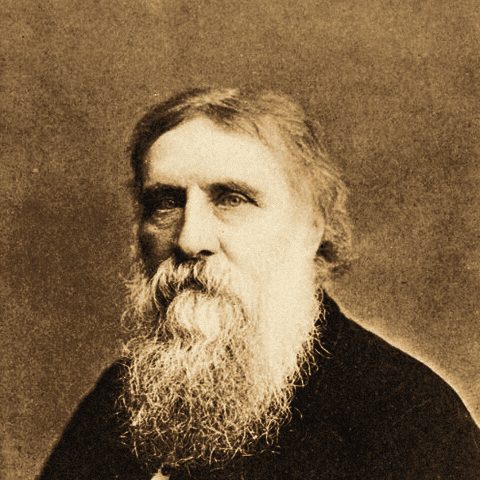
George MacDonald
1824 Huntly – 1905 Ashtead · Scottish writer and Christian minister
George MacDonald was a Scottish author, poet and Congregational minister. He became a pioneering figure in the field of modern fantasy literature and the mentor of fellow-writer Lewis Carroll.
- 1824Born, Huntly
- 1858Phantastes
- 1871At the Back of the North Wind
- 1872The Princess and the Goblin
- 1895Lilith
- 1905Died, Ashtead
More by George MacDonald
Keep going with MacDonald


If you like Lilith
More like this


Start with “The Library”
2 chapters free right now — no account. Your place follows you to iPhone and Android.