

3 chapters freeNo account needed.
Opens chapter 3 in the player · no sign-up needed
Of writing lives in general, and particularly of Pamela; with a word by the bye of Colley Cibber and others.
Appearing in 1742 and defined by Fielding as a "comic epic poem in prose", it tells of a good-natured footman's adventures on the road home from London with his friend and mentor, the absent-minded parson Abraham Adams.
Inside the book
- Free nowno account · 3 chapters
- —Part 1 of 230 min
- —Part 2 of 229 min
- 3Chapter 34 min
- Premium30 chapters · every book, 7 days free
- 4Chapter 45 min
- 5Chapter 57 min
- 6Chapter 63 min
- 7Chapter 75 min
- 8Chapter 87 min
- 9Book 1, Chapter 7: Sayings of wise men7 min
- 10Chapter 109 min
- 11Chapter 117 min
- 12Chapter 124 min
- 13Book 1, Chapter 11: Of several new matters not expected6 min
- 14Chapter 1413 min
- 15Chapter 157 min
- 16Chapter 1610 min
- 17Chapter 178 min
- 18Book 1, Chapter 16: The escape of the thief17 min
- 19Chapter 1911 min
- 20Chapter 206 min
- 21Book 2, Chapter 1: Of Divisions in Authors5 min
- 22Chapter 229 min
- 23Chapter 2313 min
- 24Chapter 2432 min
- 25Chapter 2516 min
- 26Book 2, Chapter 6: Conclusion of the unfortunate jilt9 min
- 27Chapter 275 min
- 28Chapter 286 min
- 29Chapter 2910 min
- 30Chapter 3010 min
- 31Chapter 3113 min
- 32Chapter 328 min
- 33Chapter 3312 min
The opening
Chapter 3
Of writing lives in general, and particularly of Pamela; with a word by the bye of Colley Cibber and others.
It is a trite but true observation, that examples work more forcibly on the mind than precepts: and if this be just in what is odious and blameable, it is more strongly so in what is amiable and praiseworthy. Here emulation most effectually operates upon us, and inspires our imitation in an irresistible manner. A good man therefore is a standing lesson to all his acquaintance, and of far greater use in that narrow circle than a good book.
But as it often happens that the best men are but little known, and consequently cannot extend the usefulness of their examples a great way; the writer may be called in aid to spread their history farther, and to present the amiable pictures to those who have not the happiness of knowing the originals; and so, by communicating such valuable patterns to the world, he may perhaps do a more extensive service to mankind than the person whose life originally afforded the pattern.
In this light I have always regarded those biographers who have recorded the actions of great and worthy persons of both sexes. Not to mention those antient writers which of late days are little read, being written in obsolete, and as they are generally thought, unintelligible languages, such as Plutarch, Nepos, and others which I heard of in my youth; our own language affords many of excellent use and instruction, finely calculated to sow the seeds of virtue in youth, and very easy to be comprehended by persons of moderate capacity. Such as the history of John the Great, who, by his brave and heroic actions against men of large and athletic bodies, obtained the glorious appellation of the Giant-killer; that of an Earl of Warwick, whose Christian name was Guy; the lives of Argalus and Parthenia; and above all, the history of those seven worthy personages, the Champions of Christendom. In all these delight is mixed with instruction, and the reader is almost as much improved as entertained.
But I pass by these and many others to mention two books lately published, which represent an admirable pattern of the amiable in either sex. The former of these, which deals in male virtue, was written by the great person himself, who lived the life he hath recorded, and is by many thought to have lived such a life only in order to write it. The other is communicated to us by an historian who borrows his lights, as the common method is, from authentic papers and records. The reader, I believe, already conjectures, I mean the lives of Mr Colley Cibber and of Mrs Pamela Andrews. How artfully doth the former, by insinuating that he escaped being promoted to the highest stations in Church and State, teach us a contempt of worldly grandeur! how strongly doth he inculcate an absolute submission to our superiors! Lastly, how completely doth he arm us against so uneasy, so wretched a passion as the fear of shame! how clearly doth he expose the emptiness and vanity of that phantom, reputation!
What the female readers are taught by the memoirs of Mrs Andrews is so well set forth in the excellent essays or letters prefixed to the second and subsequent editions of that work, that it would be here a needless repetition. The authentic history with which I now present the public is an instance of the great good that book is likely to do, and of the prevalence of example which I have just observed: since it will appear that it was by keeping the excellent pattern of his sister's virtues before his eyes, that Mr Joseph Andrews was chiefly enabled to preserve his purity in the midst of such great temptations. I shall only add that this character of male chastity, though doubtless as desirable and becoming in one part of the human species as in the other, is almost the only virtue which the great apologist hath not given himself for the sake of giving the example to his readers.
About the author
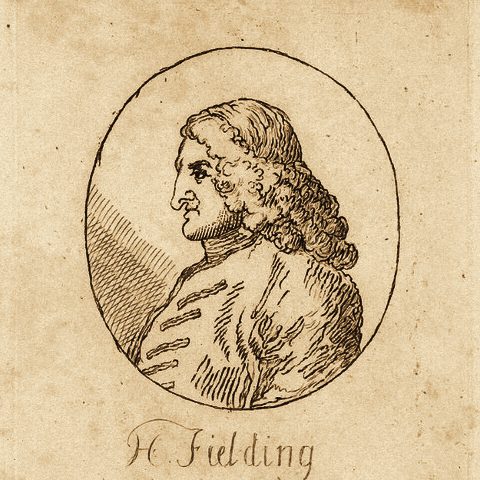
Henry Fielding
1707 Sharpham – 1754 Lisbon · English novelist and dramatist
Henry Fielding was an English writer and judge known for the use of humour and satire in his works. His famous novels include Shamela (1741), Joseph Andrews (1742), The History of Tom Jones, a Foundling (1749) and Amelia (1751).
- 1707Born, Sharpham
- 1749History of Tom Jones, a Foundling
- 1754Died, Lisbon
If you like Joseph Andrews, Volume 1
More like this


Start with chapter 3
3 chapters free right now — no account. Your place follows you to iPhone and Android.