

2 chapters freeNo account needed.
Opens “Introduction” in the player · no sign-up needed
The book was published in three volumes: "National Delusions", "Peculiar Follies", and "Philosophical Delusions". A second edition appeared in 1852, reorganizing the three volumes into two and adding numerous engravings.
Inside the book
- Free nowno account · 2 chapters
- —Introduction5 min
- 1List of Engravings in Vol. I7 min
- Premium51 chapters · every book, 7 days free
- 3The South-Sea Bubble29 min
- 5The Tulipomania29 min
- 6Geber3 min
- 7Alfarabi3 min
- 8Avicenna2 min
- 9Albertus Magnus and Thomas Aquinas9 min
- 10Arnold De Villeneuve3 min
- 11Pietro D'Apone3 min
- 12Raymond Lulli13 min
- 13Roger Bacon3 min
- 14Pope John Xxii2 min
- 15Jean De Meung4 min
- 16Nicholas Flamel13 min
- 17George Ripley4 min
- 18Bernard of Treves11 min
- 19Trithemius5 min
- 20The Marechal De Rays18 min
- 21Jacques Coeur8 min
- 22Inferior Adepts of the Fourteenth and Fifteenth Centuries5 min
- 26Chapter 232 min
- 24Augurello2 min
- 25Cornelius Agrippa12 min
- 26Paracelsus10 min
- 27Denis Zachaire16 min
- 28Dr. Dee and Edward Kelly30 min
- 29The Cosmopolite5 min
- 30Sendivogius6 min
- 31The Rosicrucians33 min
- 32Mormius2 min
- 33Borri14 min
- 34Inferior Alchymists of the Seventeenth Century11 min
- 35Jean Delisle22 min
- 36Albert Aluys7 min
- 37The Count De St. Germain16 min
- 38Cagliostro39 min
- 39Present State of Alchymy2 min
- 40Modern Prophecies50 min
- 41Fortune-Telling48 min
- 43Influence of Politics and Religion on the Hair and Beard21 min
- 44List of Engravings in Vol. Ii4 min
- 45The CrusadesIn 5 parts · Part 1 · 58:34 + Part 2 · 58:11 + Part 3 · 58:19 + Part 4 · 29:41 + Part 5 · 30:333 h 55 m
- 46The Witch ManiaIn 4 parts · Part 1 · 55:20 + Part 2 · 54:56 + Part 3 · 55:15 + Part 4 · 56:283 h 42 m
- 48Haunted Houses55 min
- 49Popular Follies of Great Cities25 min
- 50Popular Admiration of Great Thieves32 min
- 52Relics16 min
The opening
Introduction
John Law; his birth and youthful career—Duel between Law and Wilson—Law's escape from the King's Bench—The "Land-bank"—Law's gambling propensities on the continent, and acquaintance with the Duke of Orleans—State of France after the reign of Louis XIV.—Paper money instituted in that country by Law—Enthusiasm of the French people at the Mississippi Scheme—Marshal Villars—Stratagems employed and bribes given for an interview with Law—Great fluctuations in Mississippi stock—Dreadful murders—Law created comptroller-general of finances—Great sale for all kinds of ornaments in Paris—Financial difficulties commence—Men sent out to work the mines on the Mississippi, as a blind—Payment stopped at the bank—Law dismissed from the ministry—Payments made in specie—Law and the Regent satirised in song—Dreadful crisis of the Mississippi Scheme—Law, almost a ruined man, flies to Venice—Death of the Regent—Law obliged to resort again to gambling—His death at Venice
THE SOUTH-SEA BUBBLE.
Originated by Harley Earl of Oxford—Exchange Alley a scene of great excitement—Mr. Walpole—Sir John Blunt—Great demand for shares—Innumerable "Bubbles"—List of nefarious projects and bubbles—Great rise in South-sea stock—Sudden fall—General meeting of the directors—Fearful climax of the South-sea expedition—Its effects on society—Uproar in the House of Commons—Escape of Knight—Apprehension of Sir John Blunt—Recapture of Knight at Tirlemont—His second escape—Persons connected with the scheme examined—Their respective punishments—Concluding remarks
THE TULIPOMANIA.
Conrad Gesner—Tulips brought from Vienna to England—Rage for the tulip among the Dutch—Its great value—Curious anecdote of a sailor and a tulip—Regular marts for tulips—Tulips employed as a means of speculation—Great depreciation in their value—End of the mania
THE ALCHYMISTS.
Introductory remarks—Pretended antiquity of the art—Geber—Alfarabi—Avicenna—Albertus Magnus—Thomas Aquinas—Artephius—Alain de Lisle—Arnold de Villeneuve—Pietro d'Apone—Raymond Lulli—Roger Bacon—Pope John XXII.—Jean de Meung—Nicholas Flamel—George Ripley—Basil Valentine—Bernard of Trèves—Trithemius—The Maréchal de Rays—Jacques Coeur—Inferior adepts—Progress of the infatuation during the sixteenth and seventeenth centuries—Augurello—Cornelius Agrippa—Paracelsus—George Agricola—Denys Zachaire—Dr. Dee and Edward Kelly—The Cosmopolite—Sendivogius—The Rosicrucians—Michael Mayer—Robert Fludd—Jacob Böhmen—John Heydon—Joseph Francis Borri—Alchymical writers of the seventeenth century—Delisle—Albert Aluys—Count de St. Germain—Cagliostro—Present state of the science
MODERN PROPHECIES.
Terror of the approaching day of judgment—A comet the signal of that day—The prophecy of Whiston—The people of Leeds greatly alarmed at that event—The plague in Milan—Fortune-tellers and Astrologers—Prophecy concerning the overflow of the Thames—Mother Shipton—Merlin—Heywood—Peter of Pontefract—Robert Nixon—Almanac-makers
FORTUNE-TELLING.
Presumption and weakness of man—Union of Fortune-tellers and Alchymists—Judicial astrology encouraged in England from the time of Elizabeth to William and Mary—Lilly the astrologer consulted by the House of Commons as to the cause of the Fire of London—Encouragement of the art in France and Germany—Nostradamus—Basil of Florence—Antiochus Tibertus—Kepler—Necromancy—Roger Bacon, Albertus Magnus, Arnold Villeneuve—Geomancy—Augury—Divination: list of various species of divination—Oneiro-criticism (interpretation of dreams)—Omens
THE MAGNETISERS.
The influence of imagination in curing diseases—Mineral magnetisers—Paracelsus—Kircher the Jesuit—Sebastian Wirdig—William Maxwell—The Convulsionaries of St. Medard—Father Hell—Mesmer, the founder of Animal Magnetism—D'Eslon, his disciple—M. de Puysegur—Dr. Mainauduc's success in London—Holloway, Loutherbourg, Mary Pratt, &c.—Perkins's "Metallic Tractors"—Decline of the science
INFLUENCE OF POLITICS AND RELIGION ON THE HAIR AND BEARD.
Early modes of wearing the hair and beard—Excommunication and outlawry decreed against curls—Louis VII.'s submission thereto the cause of the long wars between England and France—Charles V. of Spain and his courtiers—Peter the Great—His tax upon beards—Revival of beards and moustaches after the French Revolution of 1830—The King of Bavaria (1838) orders all civilians wearing moustaches to be arrested and shaved—Examples from Bayeux tapestry
About the author
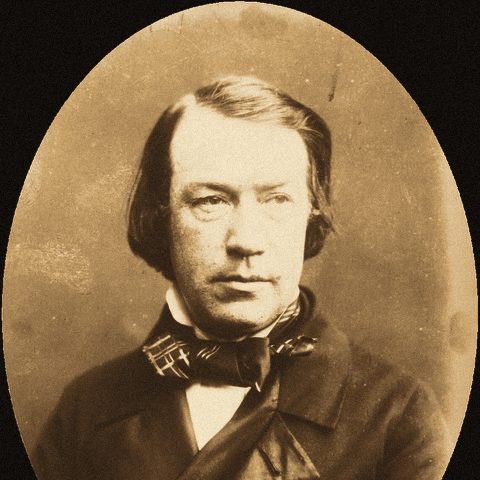
Charles Mackay
1814 Perth – 1889 London · British writer
Charles Mackay was a Scottish poet, journalist, author, anthologist, novelist, and songwriter, remembered mainly for his book Extraordinary Popular Delusions and the Madness of Crowds.
- 1814Born, Perth
- 1841Extraordinary Popular Delusions and the Madness of Crowds
- 1889Died, London
If you like Extraordinary Popular Delusions and the Madness of Crowds
More like this


Start with “Introduction”
2 chapters free right now — no account. Your place follows you to iPhone and Android.