

Chapter 1 freeNo account needed.
Opens chapter 1 in the player · no sign-up needed
Ben-Hur: A Tale of the Christ is a novel by Lew Wallace, published by Harper and Brothers on November 12, 1880, and considered "the most influential Christian book of the nineteenth century".
Inside the book
- Free nowno account · 1 chapter
- 1Chapter 19 min
- Premium80 chapters · every book, 7 days free
- 2Chapter 210 min
- 3Chapter 37 min
- 4Chapter 49 min
- 5Chapter 518 min
- 6Chapter 67 min
- 7Chapter 711 min
- 8Chapter 810 min
- 9Chapter 918 min
- 10Chapter 103 min
- 11Chapter 1112 min
- 12Chapter 126 min
- 13Chapter 1320 min
- 14Chapter 145 min
- 15Chapter 157 min
- 16Chapter 1620 min
- 17Chapter 1710 min
- 18Chapter 1814 min
- 19Chapter 1916 min
- 20Chapter 2025 min
- 21Chapter 217 min
- 22Chapter 2214 min
- 23Chapter 2313 min
- 24Chapter 2414 min
- 25Chapter 2513 min
- 26Book 3, Chapter 5: Every soul aboard, even the ship, awoke14 min
- 27Chapter 2711 min
- 28Chapter 288 min
- 29Chapter 296 min
- 30Chapter 3019 min
- 31Chapter 3115 min
- 32Chapter 3212 min
- 33Chapter 3313 min
- 34Chapter 3412 min
- 35Chapter 3514 min
- 36Chapter 3612 min
- 37Chapter 3715 min
- 38Chapter 3817 min
- 39Chapter 3920 min
- 40Chapter 4018 min
- 41Chapter 417 min
- 42Chapter 4212 min
- 43Chapter 4315 min
- 44Chapter 4411 min
- 45Chapter 4510 min
- 46Chapter 4613 min
- 47Chapter 4723 min
- 48Chapter 482 min
- 49Chapter 4912 min
- 50Chapter 508 min
- 51Chapter 5112 min
- 52Chapter 5222 min
- 53Chapter 538 min
- 54Chapter 549 min
- 55Chapter 5513 min
- 56Chapter 5612 min
- 57Chapter 5715 min
- 58Chapter 5817 min
- 59Chapter 595 min
- 60Chapter 6021 min
- 61Chapter 6114 min
- 62Chapter 6222 min
- 63Chapter 6312 min
- 64Chapter 6413 min
- 65Chapter 6515 min
- 66Chapter 6619 min
- 67Chapter 676 min
- 68Chapter 6812 min
- 69Chapter 6915 min
- 70Chapter 7020 min
- 71Chapter 7117 min
- 72Chapter 7215 min
- 73Chapter 7312 min
- 74Chapter 7418 min
- 75Chapter 7515 min
- 76Chapter 767 min
- 77Chapter 7722 min
- 78Chapter 786 min
- 79Chapter 7914 min
- 80Chapter 8018 min
- 81Chapter 8136 min
The opening
Chapter 1
The Jebel es Zubleh is a mountain fifty miles and more in length, and so narrow that its tracery on the map gives it a likeness to a caterpillar crawling from the south to the north. Standing on its red-and-white cliffs, and looking off under the path of the rising sun, one sees only the Desert of Arabia, where the east winds, so hateful to vinegrowers of Jericho, have kept their playgrounds since the beginning. Its feet are well covered by sands tossed from the Euphrates, there to lie, for the mountain is a wall to the pasture-lands of Moab and Ammon on the west—lands which else had been of the desert a part.
The Arab has impressed his language upon everything south and east of Judea, so, in his tongue, the old Jebel is the parent of numberless wadies which, intersecting the Roman road—now a dim suggestion of what once it was, a dusty path for Syrian pilgrims to and from Mecca—run their furrows, deepening as they go, to pass the torrents of the rainy season into the Jordan, or their last receptacle, the Dead Sea. Out of one of these wadies—or, more particularly, out of that one which rises at the extreme end of the Jebel, and, extending east of north, becomes at length the bed of the Jabbok River—a traveller passed, going to the table-lands of the desert. To this person the attention of the reader is first besought.
Judged by his appearance, he was quite forty-five years old. His beard, once of the deepest black, flowing broadly over his breast, was streaked with white. His face was brown as a parched coffee-berry, and so hidden by a red kufiyeh (as the kerchief of the head is at this day called by the children of the desert) as to be but in part visible. Now and then he raised his eyes, and they were large and dark. He was clad in the flowing garments so universal in the East; but their style may not be described more particularly, for he sat under a miniature tent, and rode a great white dromedary.
It may be doubted if the people of the West ever overcome the impression made upon them by the first view of a camel equipped and loaded for the desert. Custom, so fatal to other novelties, affects this feeling but little. At the end of long journeys with caravans, after years of residence with the Bedawin, the Western-born, wherever they may be, will stop and wait the passing of the stately brute. The charm is not in the figure, which not even love can make beautiful; nor in the movement, the noiseless stepping, or the broad careen. As is the kindness of the sea to a ship, so that of the desert to its creature. It clothes him with all its mysteries; in such manner, too, that while we are looking at him we are thinking of them: therein is the wonder. The animal which now came out of the wady might well have claimed the customary homage.
Its color and height; its breadth of foot; its bulk of body, not fat, but overlaid with muscle; its long, slender neck, of swanlike curvature; the head, wide between the eyes, and tapering to a muzzle which a lady's bracelet might have almost clasped; its motion, step long and elastic, tread sure and soundless—all certified its Syrian blood, old as the days of Cyrus, and absolutely priceless. There was the usual bridle, covering the forehead with scarlet fringe, and garnishing the throat with pendent brazen chains, each ending with a tinkling silver bell; but to the bridle there was neither rein for the rider nor strap for a driver. The furniture perched on the back was an invention which with any other people than of the East would have made the inventor renowned. It consisted of two wooden boxes, scarce four feet in length, balanced so that one hung at each side; the inner space, softly lined and carpeted, was arranged to allow the master to sit or lie half reclined; over it all was stretched a green awning. Broad back and breast straps, and girths, secured with countless knots and ties, held the device in place.
In such manner the ingenious sons of Cush had contrived to make comfortable the sunburnt ways of the wilderness, along which lay their duty as often as their pleasure.
When the dromedary lifted itself out of the last break of the wady, the traveller had passed the boundary of El Belka, the ancient Ammon. It was morning-time. Before him was the sun, half curtained in fleecy mist; before him also spread the desert; not the realm of drifting sands, which was farther on, but the region where the herbage began to dwarf; where the surface is strewn with boulders of granite, and gray and brown stones, interspersed with languishing acacias and tufts of camel-grass. The oak, bramble, and arbutus lay behind, as if they had come to a line, looked over into the well-less waste and crouched with fear.
And now there was an end of path or road. More than ever the camel seemed insensibly driven; it lengthened and quickened its pace, its head pointed straight towards the horizon; through the wide nostrils it drank the wind in great draughts. The litter swayed, and rose and fell like a boat in the waves. Dried leaves in occasional beds rustled underfoot. Sometimes a perfume like absinthe sweetened all the air. Lark and chat and rock-swallow leaped to wing, and white partridges ran whistling and clucking out of the way. More rarely a fox or a hyena quickened his gallop, to study the intruders at a safe distance. Off to the right rose the hills of the Jebel, the pearl-gray veil resting upon them changing momentarily into a purple which the sun would make matchless a little later. Over their highest peaks a vulture sailed on broad wings into widening circles. But of all these things the tenant under the green tent saw nothing, or, at least, made no sign of recognition. His eyes were fixed and dreamy. The going of the man, like that of the animal, was as one being led.
For two hours the dromedary swung forward, keeping the trot steadily and the line due east. In that time the traveller never changed his position, nor looked to the right or left. On the desert, distance is not measured by miles or leagues, but by the saat, or hour, and the manzil, or halt: three and a half leagues fill the former, fifteen or twenty-five the latter; but they are the rates for the common camel. A carrier of the genuine Syrian stock can make three leagues easily. At full speed he overtakes the ordinary winds. As one of the results of the rapid advance, the face of the landscape underwent a change. The Jebel stretched along the western horizon, like a pale-blue ribbon. A tell, or hummock of clay and cemented sand, arose here and there. Now and then basaltic stones lifted their round crowns, outposts of the mountain against the forces of the plain; all else, however, was sand, sometimes smooth as the beaten beach, then heaped in rolling ridges; here chopped waves, there long swells. So, too, the condition of the atmosphere changed. The sun, high risen, had drunk his fill of dew and mist, and warmed the breeze that kissed the wanderer under the awning; far and near he was tinting the earth with faint milk-whiteness, and shimmering all the sky.
Two hours more passed without rest or deviation from the course. Vegetation entirely ceased. The sand, so crusted on the surface that it broke into rattling flakes at every step, held undisputed sway. The Jebel was out of view, and there was no landmark visible. The shadow that before followed had now shifted to the north, and was keeping even race with the objects which cast it; and as there was no sign of halting, the conduct of the traveller became each moment more strange.
No one, be it remembered, seeks the desert for a pleasure-ground. Life and business traverse it by paths along which the bones of things dead are strewn as so many blazons. Such are the roads from well to well, from pasture to pasture. The heart of the most veteran sheik beats quicker when he finds himself alone in the pathless tracts. So the man with whom we are dealing could not have been in search of pleasure; neither was his manner that of a fugitive; not once did he look behind him. In such situations fear and curiosity are the most common sensations; he was not moved by them. When men are lonely, they stoop to any companionship; the dog becomes a comrade, the horse a friend, and it is no shame to shower them with caresses and speeches of love. The camel received no such token, not a touch, not a word.
Exactly at noon the dromedary, of its own will, stopped, and uttered the cry or moan, peculiarly piteous, by which its kind always protest against an overload, and sometimes crave attention and rest. The master thereupon bestirred himself, waking, as it were, from sleep. He threw the curtains of the houdah up, looked at the sun, surveyed the country on every side long and carefully, as if to identify an appointed place. Satisfied with the inspection, he drew a deep breath and nodded, much as to say, "At last, at last!" A moment after, he crossed his hands upon his breast, bowed his head, and prayed silently. The pious duty done, he prepared to dismount. From his throat proceeded the sound heard doubtless by the favorite camels of Job—Ikh! ikh!—the signal to kneel. Slowly the animal obeyed, grunting the while. The rider then put his foot upon the slender neck, and stepped upon the sand.
About the author
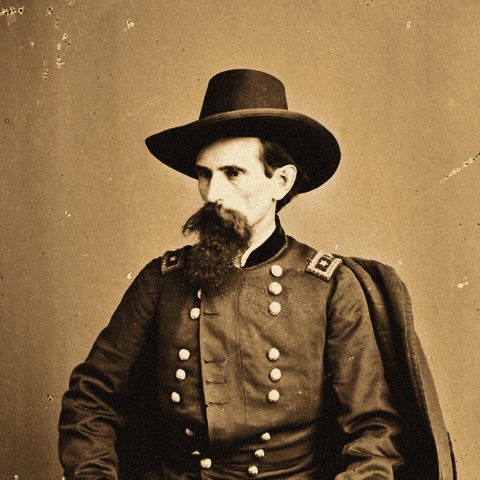
Lew Wallace
1827 Brookville – 1905 Crawfordsville
Lewis Wallace was an American lawyer, Union general in the American Civil War, governor of New Mexico Territory, politician, diplomat, artist, inventor, and author from Indiana. Among his novels and biographies, Wallace is best known for his historical adventure story, Ben-Hur: A Tale of the Christ (1880), a bestselling novel that has been called "the most influential Christian book of the nineteenth century."
- 1827Born, Brookville
- 1880Ben-Hur
- 1905Died, Crawfordsville
If you like Ben-Hur
More like this


Start with chapter 1
First chapter free right now — no account. Your place follows you to iPhone and Android.