

Chapter 1 freeNo account needed.
Opens “To the Re-Issue of 1880” in the player · no sign-up needed
Ruskin asks how a nation should discover artistic talent, apply it to worthy work, and accumulate and distribute works of art, and argues that art and its makers must be valued by more than market price.
Inside the book
- Free nowno account · 1 chapter
- 1To the Re-Issue of 18802 min
- Premium7 chapters · every book, 7 days free
- 2To the 1857 Edition3 min
- 6Education in Art16 min
- 7To the Mansfield Art Night Class11 min
- 8Based on Natural Selection14 min
The opening
To the Re-Issue of 1880
The title of this book,—or, more accurately, of its subject;—for no author was ever less likely than I have lately become, to hope for perennial pleasure to his readers from what has cost himself the most pains,—will be, perhaps, recognised by some as the last clause of the line chosen from Keats by the good folks of Manchester, to be written in letters of gold on the cornice, or Holy rood, of the great Exhibition which inaugurated the career of so many,—since organized, by both foreign governments and our own, to encourage the production of works of art, which the producing nations, so far from intending to be their "joy for ever," only hope to sell as soon as possible. Yet the motto was chosen with uncomprehended felicity: for there never was, nor can be, any essential beauty possessed by a work of art, which is not based on the conception of its honoured permanence, and local influence, as a part of appointed and precious furniture, either in the cathedral, the house, or the joyful thoroughfare, of nations which enter their gates with thanksgiving, and their courts with praise.
"Their" courts—or "His" courts;—in the mind of such races, the expressions are synonymous: and the habits of life which recognise the delightfulness, confess also the sacredness, of homes nested round the seat of a worship unshaken by insolent theory: themselves founded on an abiding affection for the past, and care for the future; and approached by paths open only to the activities of honesty, and traversed only by the footsteps of peace.
The exposition of these truths, to which I have given the chief energy of my life, will be found in the following pages first undertaken systematically and in logical sequence; and what I have since written on the political influence of the Arts has been little more than the expansion of these first lectures, in the reprint of which not a sentence is omitted or changed.
The supplementary papers added contain, in briefest form, the aphorisms respecting principles of art-teaching of which the attention I gave to this subject during the continuance of my Professorship at Oxford confirms me in the earnest and contented re-assertion.
JOHN RUSKIN,
BRANTWOOD,
April 29th, 1880.
PREFACE
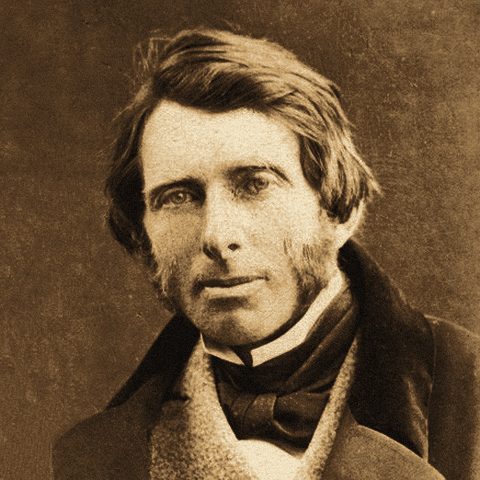
About the author
John Ruskin
1819 London – 1900 Coniston · English writer and art critic
John Ruskin was an English polymath – a writer, lecturer, art historian, art critic, draughtsman and philanthropist of the Victorian era. He wrote on subjects as varied as art, architecture, political economy, education, museology, geology, botany, ornithology, literature, history, and myth.
If you like A Joy For Ever (and Its Price in the Market)
More like this


Start with “To the Re-Issue of 1880”
First chapter free right now — no account. Your place follows you to iPhone and Android.